Fog-Kissed Kiev: Capturing Solitude and Light’s Dance
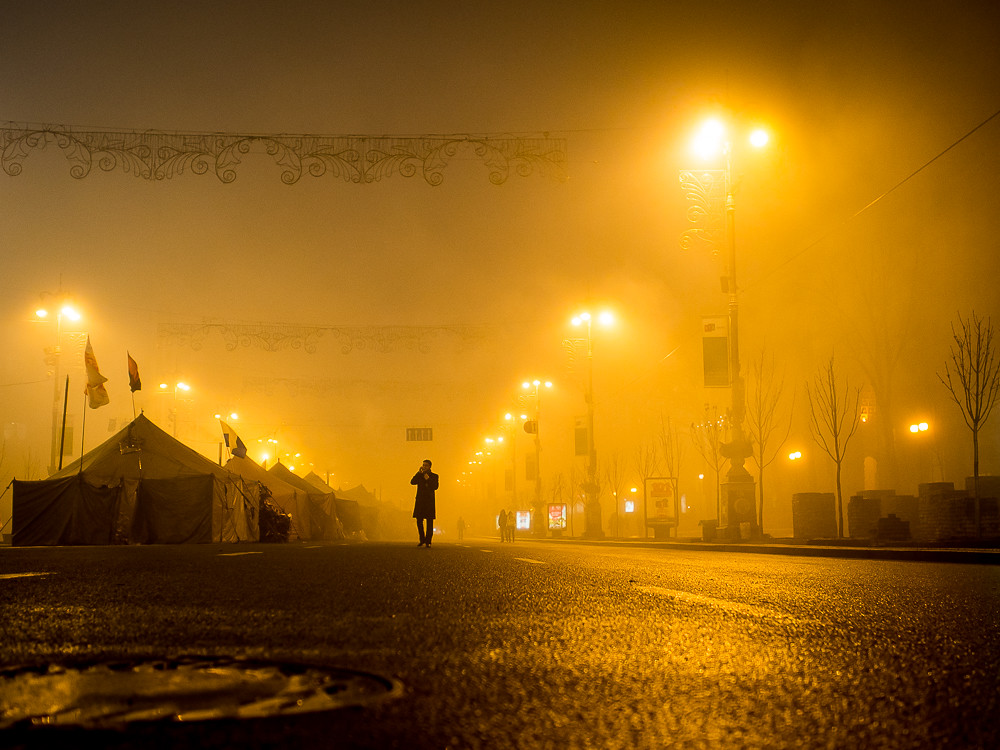
As evening descends upon Kiev, the fog becomes more than weather—it’s a presence, a living veil that softens the city’s pulse into a quiet reverie. Streetlights shimmer like molten gold, diffused through the mist, turning Khreshchatyk into a dreamscape where solitude and community coexist in luminous silence. In that golden hush, a lone figure walks, both part of the scene and apart from it—a fleeting silhouette in the poetry of night.
Table of Contents
- The Allure of Fog
- The Dance of Light and Shadow
- People as Poetic Elements
- Lessons for Aspiring Photographers
- Capturing Essence Over Image
The Allure of Fog
Evening fog has a way of dissolving the ordinary. It mutes the noise, blurs the edges, and transforms the known into something almost mythical. Here, Kiev’s grand avenue is reborn beneath a shroud of gold and gray—a theater of half-seen forms and softened light. For photographers, fog offers not just atmosphere but emotion. It conceals as much as it reveals, inviting the viewer to look not for clarity, but for feeling.
The Dance of Light and Shadow
Under the amber glow of streetlights, night and mist perform their own pas de deux. Each lamp throws a halo into the fog, diffusing light into layers of warmth and mystery. The slick pavement mirrors the glow, doubling its power—an alchemy that turns moisture and light into something almost celestial. In such conditions, every reflection becomes part of the composition; every glimmer is a brushstroke in the painting of the night.
People as Poetic Elements
The solitary figure crossing the avenue anchors the scene in humanity. Their silhouette adds scale, yes—but more importantly, it adds narrative. Who are they? Where are they going? The fog, by obscuring details, amplifies wonder. In travel photography, such human punctuation can transform a visual document into a living story. A single person can balance vast emptiness with a heartbeat.
Lessons for Aspiring Photographers
- Embrace the Unseen: Fog is the art of suggestion. Let it hide what it will, and focus instead on what emotion remains.
- Use Available Light: In the absence of sun, streetlamps and reflections become your palette. Let them paint your scene.
- Include Humanity: Even distant or anonymous, human figures turn atmosphere into story.
- Experiment with Perspective: Lower angles can make the familiar uncanny, especially when the world above fades into mist.
Mastering such conditions means learning to see beyond perfection. It’s about finding beauty not despite the haze, but because of it.
Capturing Essence Over Image
To photograph fog is to chase the ephemeral. It resists precision and rewards intuition. This image from Khreshchatyk reminds us that great photography doesn’t just show—it evokes. The goal isn’t to capture every detail, but to translate the feeling of being there: the warmth of the lights, the chill of the air, the quiet ache of beauty at the edge of night.
So when fog falls over a city you love, don’t rush to adjust your settings. Pause. Listen. Let the mist speak—and then, with a single frame, let it whisper through your lens.

Amidst the golden haze of Khreshchatyk Street, figures emerge like whispers, their silhouettes softened by the embrace of fog and lamplight. A quiet tableau unfolds in Kiev, where light dances on wet pavement, painting fleeting stories on a canvas of night.
Link to original. Licensed under CC BY-ND.