Solitude in Motion: Capturing Stillness in Train Stations
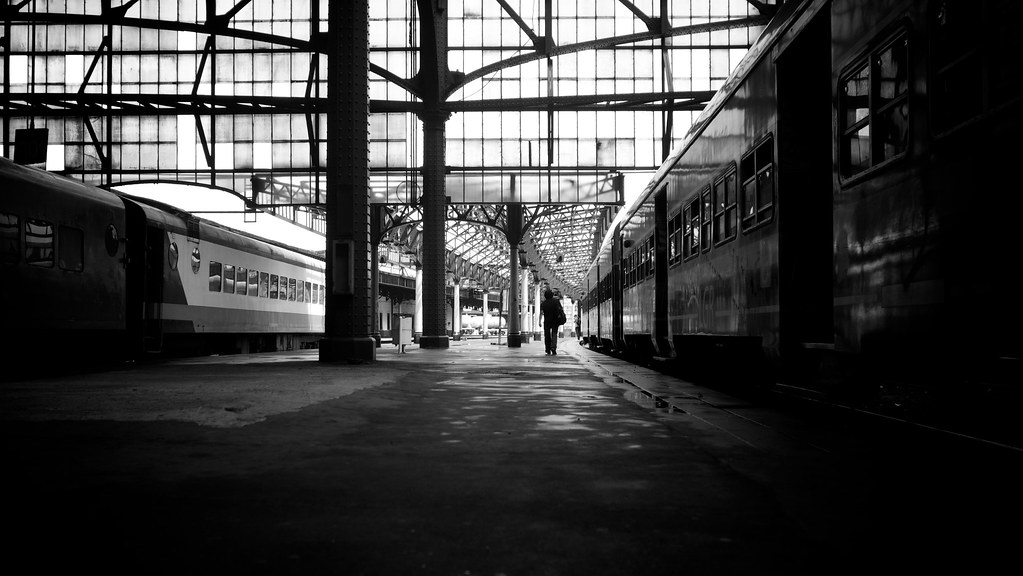
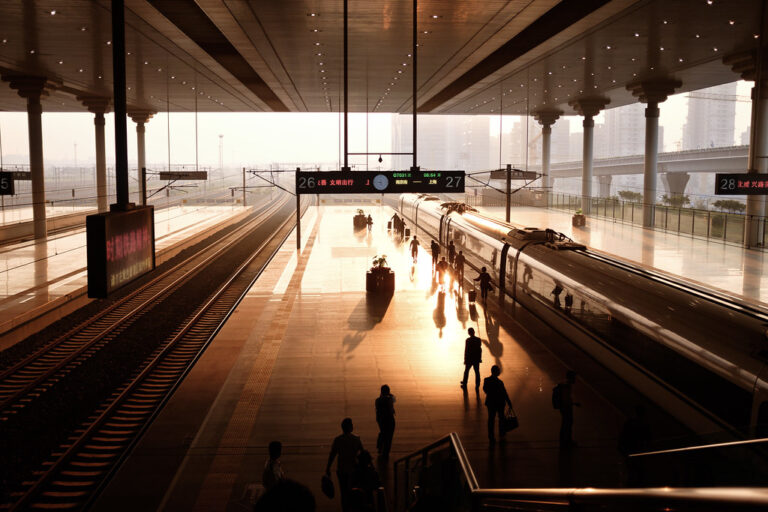
In a world where train stations hum with motion and noise, this photograph captures the rarest moment of all—stillness. Between the departing and the arriving, between steel and shadow, a solitary traveler walks through the frame like a thought that lingers after the sound has faded.
Table of Contents
- The Power of Human Presence
- Mastering Light and Shadow
- Compositional Balance
- Capturing Movement Amidst Stillness
- Lessons for Your Photography
The Power of Human Presence
What gives this image its emotional gravity is the lone figure moving down the platform—a reminder that travel is always personal, even in grand industrial spaces. The traveler anchors the scene, offering both scale and story. Without that human presence, the symmetry might feel cold; with it, the frame breathes.
In travel photography, a single person can turn architecture into narrative. Here, the silhouette transforms a station into a stage—one where solitude, reflection, and forward motion coexist.
Mastering Light and Shadow
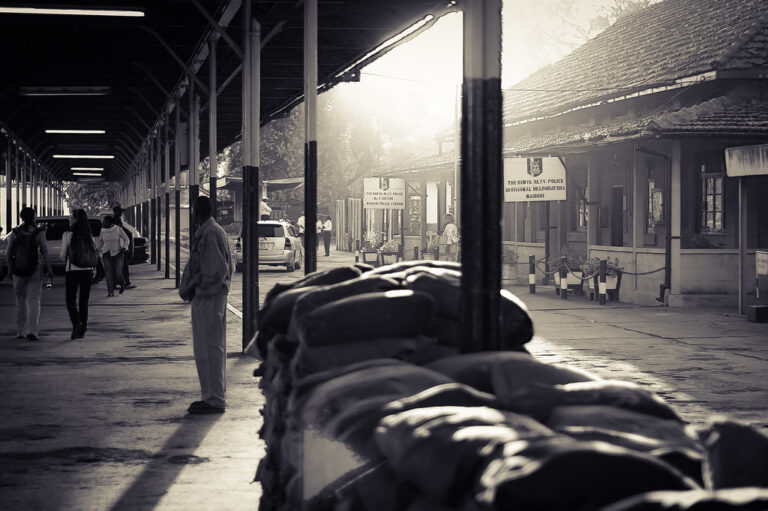
This photograph thrives on contrast. The backlit canopy floods the scene with silvery light that bleeds into shadow, emphasizing textures on steel, glass, and wet pavement. The monochrome treatment heightens that interplay—stripping away distraction to let tone and geometry do the talking.
When shooting stations or other urban interiors, train yourself to read light as rhythm. The dance between illumination and obscurity can transform a utilitarian setting into something cinematic. Let the light tell you where to place your subject—and when to click the shutter.
Compositional Balance
The composition is a study in symmetry without rigidity. Parallel trains form strong vertical and horizontal anchors, while the receding canopy draws the viewer’s gaze toward the vanishing point—and the traveler. That alignment guides the eye naturally, creating visual tension between order and motion.
In your own work, look for converging lines that invite the viewer to step into the image. These pathways don’t just create depth; they suggest storylines, leading both the subject and the audience forward together.
Capturing Movement Amidst Stillness
Though nothing moves in this frozen instant, the photograph hums with implied motion—the trains waiting, the traveler walking, the world beyond the frame continuing on. Even the puddles glint with evidence of recent life. That’s the paradox of great travel photography: to make stillness feel alive.
Moments like this ask for patience. Wait for that one gesture or stride that transforms an empty space into a living scene. The result isn’t just documentation—it’s atmosphere.
Lessons for Your Photography
Every station, every stop, holds a story. This photograph reminds us that beauty isn’t only in the destination—it’s in the pause between places. To elevate your own travel images, remember:
- Include the Human Thread: One figure can make a vast space feel intimate. Let people give your images emotional entry points.
- Shape the Light: Seek contrast and reflection. Light defines architecture and mood more powerfully than color ever could.
- Use Leading Lines: Platforms, rails, and beams are natural compositional tools. Let them guide the eye and deepen perspective.
Master these, and you’ll find that even the quietest moment—like a traveler between trains—can speak volumes.

A lone traveler walks the platform of Constitución Train Station in Buenos Aires, framed by the poetry of light and steel in perfect monochrome harmony.
Photo by Nicolas Alejandro. Licensed under CC BY.