Eiffel Tower Photography: Turning the Mundane into the Majestic
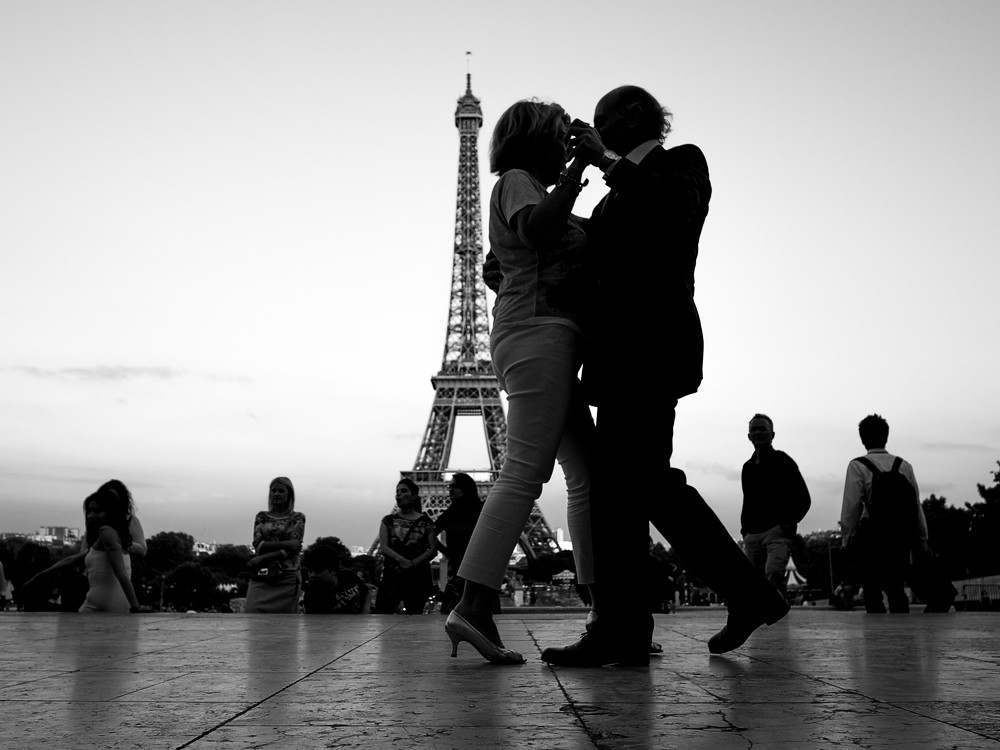
Some photographs don’t just capture a scene—they breathe life into it. This one arrests time itself: a fleeting waltz of elegance and chance beneath the iron lace of the Eiffel Tower. In the play of shadow and light, a simple human gesture becomes poetry—Paris distilled into a single, timeless frame.
Table of Contents
- The Art of Black and White Photography
- Capturing Street Photography Magic
- How to Photograph the Eiffel Tower in Paris
- Mastering Exposure for Artistic Impact
- Conclusion
The Art of Black and White Photography
Black and white photography strips the world to its essentials—form, tone, and feeling. Without color to seduce the eye, we see more clearly: the curve of a wrist, the gleam of twilight on stone, the dance of contrast that defines emotion. Here, the silhouetted couple moves like a whisper against the Paris dusk, the Eiffel Tower rising not as a landmark but as an accomplice to romance.
Capturing Street Photography Magic
Street photography is the art of seeing before the world blinks. It’s about trusting instinct—the moment before the subject knows it’s being watched. In this frame, what might have been an ordinary evening becomes eternal. The grain, the grit, the glow: each texture tells a story of Paris not curated, but lived. The photographer doesn’t impose meaning; they discover it, mid-breath.
How to Photograph the Eiffel Tower in Paris
The Eiffel Tower has been photographed more times than perhaps any monument on Earth. To make it new again demands imagination. In this image, the tower recedes into a soft blur—recognizable, but no longer the star. Shot at f/4.0, the background holds the memory of Paris, while the dancers command the present moment. It’s a masterclass in storytelling through selective focus: context lending soul to intimacy.
Mastering Exposure for Artistic Impact
Light can be both muse and menace. Automatic exposure smooths the world; artistic exposure reveals it. Here, a deliberate underexposure heightens the drama—the gleam of the streetlamp, the dark embrace of the figures, the metallic shimmer of the tower beyond. Each choice is intentional, each shadow a brushstroke. Mastery lies not in what the camera sees, but in what the artist chooses to show.
Tips for Your Own Travel Photography
-
Play with Depth-of-Field: Let the world blur behind your subject. Recognition is powerful, but suggestion is unforgettable.
-
Embrace Black & White: Color can charm, but monochrome reveals truth—the rhythm of light itself.
-
Manual Over Auto: Don’t let algorithms define your art. Choose exposure the way a painter chooses pigment.
-
Capture Emotion: The best travel photographs are about people, not places—human moments set against the grandeur of elsewhere.
Conclusion
Every great photograph lives where patience meets instinct. The tower, the dancers, the twilight—all conspired for a heartbeat, and someone was ready. That readiness, that awareness, is what transforms an image into art. The next time you lift your camera, remember: beauty doesn’t wait to be arranged. It appears, fleeting and real, for those who dare to see it.

A couple shares a dance in front of the iconic Eiffel Tower, silhouetted against the evening sky in a timeless moment of romance. Link to original. Licensed under CC BY-ND.