Karlovy Vary’s Charm: Capturing Timeless Elegance
In a world awash with images, a few photographs rise above the noise—inviting not just a glance, but a quiet pause. They pull us inward, asking us to feel their essence as much as to see it.
Table of Contents
- The Magic of Compression
- Vibrant Colors and Composition
- How to Photograph in Karlovy Vary
- A Glimpse Into History: Karlovy Vary (Carlsbad)
- What You Can Learn
The Magic of Compression
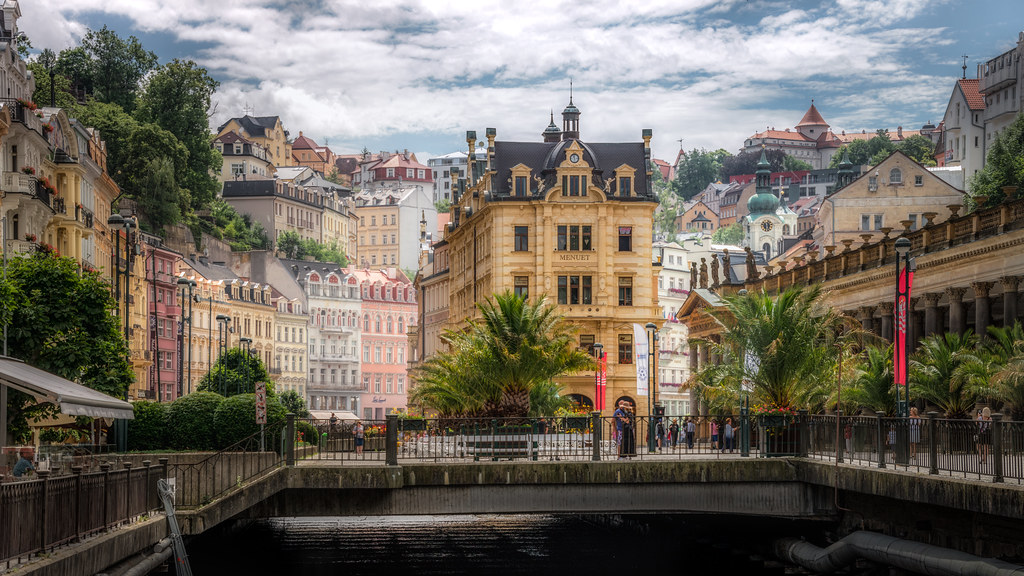
This evocative image of Karlovy Vary (Carlsbad) was captured at 85mm—an inspired choice that lends the photograph its painterly intimacy. The subtle compression brings facades and spires into whispered conversation, as if the entire town has drawn closer for a portrait.
It’s a reminder that lens choice isn’t merely technical—it’s emotional. The 85mm compresses distance without distortion, ideal for urban landscapes dense with detail and texture. It transforms visual clutter into visual harmony, giving depth a voice of its own.
Vibrant Colors and Composition
Then there are the colors: terracotta rooftops against sorbet-pastel facades, the kind of palette that makes painters sigh. The photographer’s framing guides the eye effortlessly from front to back, each tone and line reinforcing a sense of rhythm and calm. It’s a masterclass in chromatic storytelling.
Even the palm trees—unexpected in this European spa town—add a cinematic note, framing the architecture like a curtain parting for a performance. Their presence softens the geometry and introduces a touch of wanderlust, a small rebellion against symmetry.
How to Photograph in Karlovy Vary
To capture Karlovy Vary at its best, follow the light. Early morning and late afternoon are your allies here: soft, diffused illumination reveals the ornate details of the Baroque balconies and colonnades without harsh contrast. The town glows, its colors breathing rather than shouting.
Seek out the high ground—terraces, hilltop paths, or the Diana Lookout Tower—for compositions that layer color and depth like a musical score. Each vantage point offers new dialogue between river, rooftops, and forested slopes. Karlovy Vary rewards patience: it’s a town that unveils itself slowly, through changing light and lingering looks.
A Glimpse Into History: Karlovy Vary (Carlsbad)
Founded in 1370 by Emperor Charles IV after the discovery of its healing springs, Karlovy Vary became Europe’s elegant answer to rejuvenation. Royals and writers—from Peter the Great to Goethe—soaked here, seeking both cure and inspiration. Even today, the city seems suspended between centuries, its colonnades echoing with the footsteps of travelers past.
To photograph Karlovy Vary is to step into this continuum of beauty and recovery. Every frame carries the patina of history—the kind of quiet grandeur that doesn’t shout for attention but earns it.
What You Can Learn
This photograph distills the art of seeing into five enduring lessons:
- Choose with intent: An 85mm lens can compress space without sacrificing clarity, drawing intimacy from distance.
- Compose with color: Let hues converse; balance warm and cool tones to guide the viewer’s emotional path.
- Frame with purpose: Use trees, arches, or even shadows as natural frames—they invite the viewer into the story.
- Follow the light: Soft, overcast skies often yield the most nuanced textures and tones.
- Climb higher: Seek vantage points that reveal the layers of a place—its rhythm, repetition, and surprise.
Apply these principles and your travel photography transcends documentation—it becomes interpretation. Like Karlovy Vary itself, the image will linger: elegant, timeless, and quietly alive.

A picturesque scene in Karlovy Vary showcases its charming architecture and lush greenery, with colorful buildings nestled against the hillside under a vibrant sky. Photo by Bernd Thaller. Licensed under CC BY.