Top Kyoto Street Photography Locations: Capture Tradition And Modernity
Few cities in the world stage the meeting of past and present as effortlessly as Kyoto. Once Japan’s imperial capital, it remains a living gallery of contrasts — where monks in saffron robes pass beneath glowing billboards, and centuries-old wooden teahouses stand beside sleek espresso bars. For street photographers, Kyoto is pure alchemy: every alleyway, shrine, and market reveals a dialogue between ritual and reinvention.
Whether you’re drawn to the quiet elegance of Gion at dusk, the sensory rush of Nishiki Market, or the neon choreography of Shijo-Kawaramachi, Kyoto rewards patience and curiosity in equal measure. Here are five of the city’s most evocative places to capture the pulse of tradition meeting modern life — moments where Kyoto shows not just its beauty, but its soul.
Table of Contents
- 1. Gion District
- 2. Nishiki Market
- 3. Pontocho Alley
- 4. Shijo-Kawaramachi Crossing
- 5. Kyoto Station Area
1. Gion District
Gion is Kyoto distilled — a warren of narrow lanes, glowing lanterns, and whispering footsteps on stone. It’s the city’s heart of tradition, where time moves differently and elegance feels lived rather than staged.
Why Gion?
Once home to geiko and maiko who entertained the elite, Gion remains a visual poem in wood and light. The soft lantern glow, the silhouette of a kimono vanishing into shadow — these are the fleeting moments that make Kyoto timeless.
Insider Advice
Arrive just before dusk. As daylight fades and paper lanterns ignite, the streets shimmer between worlds — neither day nor night, ancient nor modern — a rare and perfect hour for the patient photographer.
Photography Tip
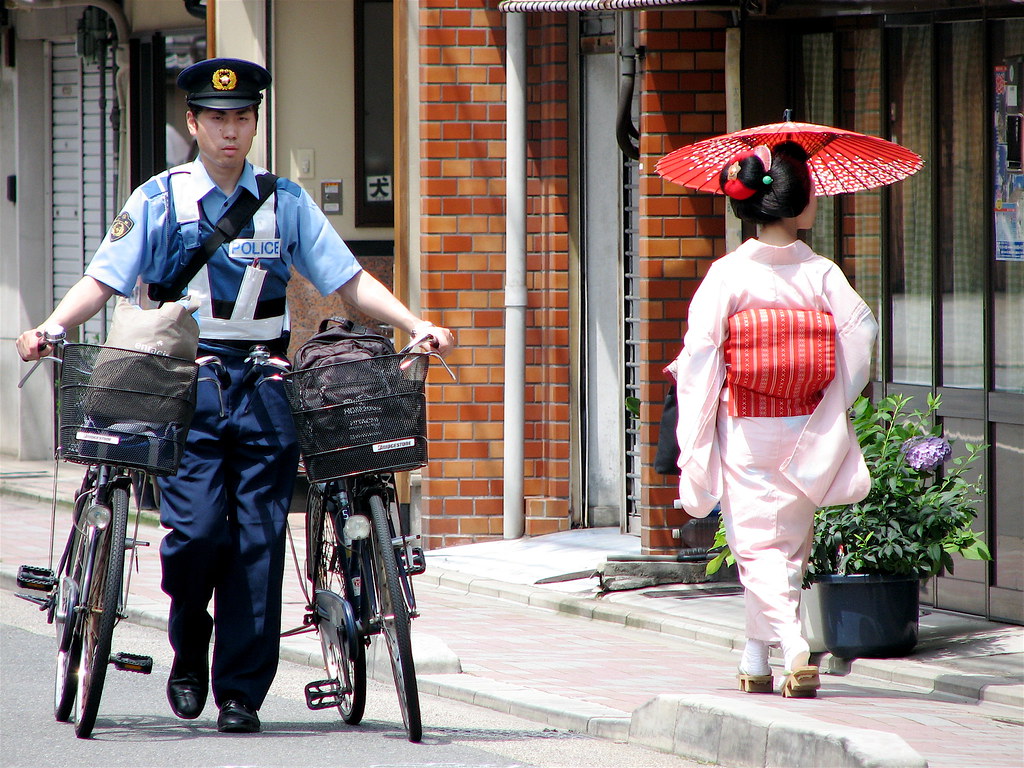
A police officer walks with bicycles past a woman in traditional attire, highlighting the cultural blend of modernity and tradition in Kyoto’s Gion District. Link to original. Licensed under CC BY-SA.
Use a fast prime (f/1.4–f/2) and let the ambient light breathe. Don’t chase subjects; wait for them to walk into your composition — Kyoto reveals itself to those who wait.
2. Nishiki Market
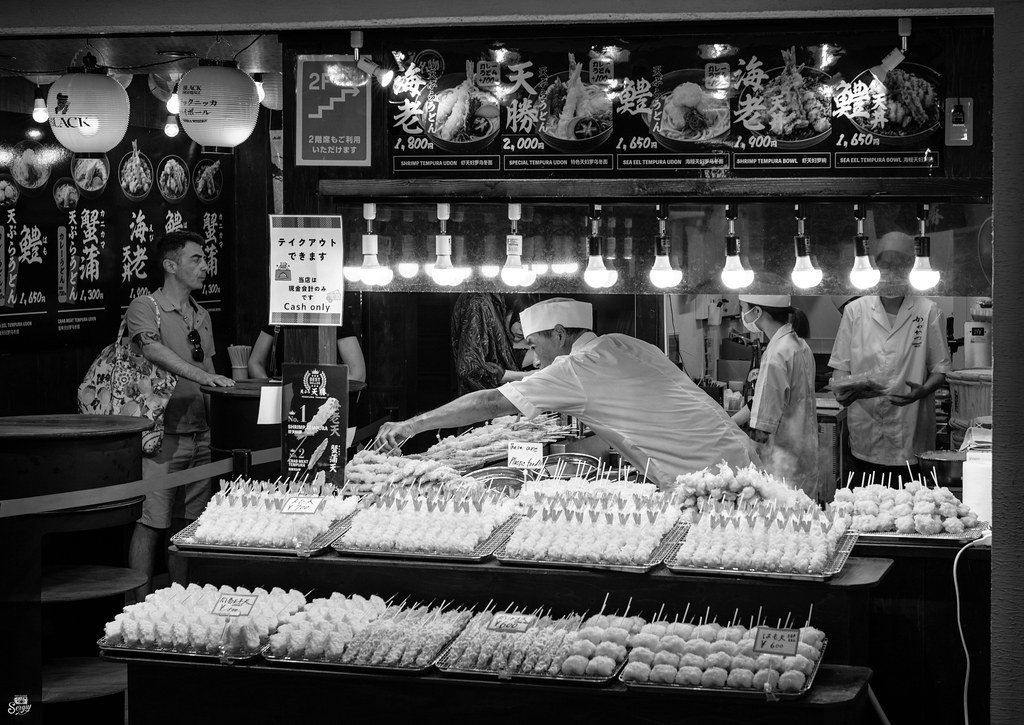
A bustling scene at Nishiki Market in Kyoto captures chefs and patrons engaged in the vibrant exchange of freshly prepared tempura, under the warm glow of hanging lights. Photo by Sergiy Galyonkin. Licensed under CC BY-SA.
After the hush of temples, Nishiki Market jolts the senses awake. Known as “Kyoto’s Kitchen,” it’s a 400-meter stretch of life in motion — sizzling skewers, shouts of vendors, and bursts of color that change with every step.
Why Nishiki Market?
Every stall is a story — the pride of a knife seller, the concentration of a confectioner, the gleam of fresh fish under fluorescent light. It’s a masterclass in human detail and candid emotion.
Insider Advice
Visit mid-morning when vendors are prepping and locals are shopping. Interact, smile, taste. The best photos here come from genuine connection, not stealth.
Photography Tip
Use a 35mm lens for a natural, documentary feel. Keep your aperture around f/4 to balance subject and environment — it’s about capturing Kyoto’s heartbeat, not isolating it.
3. Pontocho Alley
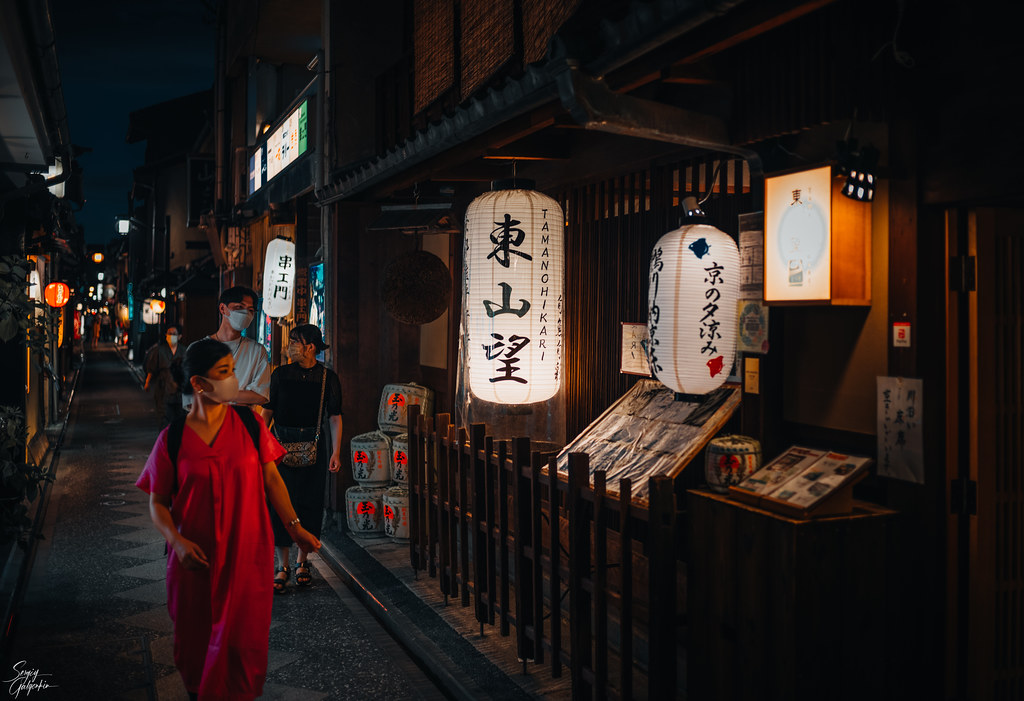
A vibrant evening scene captures the essence of Pontocho Alley in Kyoto, with its illuminated lanterns and traditional architecture creating a warm, inviting atmosphere. Photo by Sergiy Galyonkin. Licensed under CC BY-SA.
Pontocho is Kyoto after dark — slender, secretive, and impossibly photogenic. This riverside lane, lit by lanterns and laughter, feels suspended between memory and modernity.
Why Pontocho?
Here, you’ll find perfect contrasts: old wood and new neon, quiet doorways and bursts of nightlife. The reflections on wet stone after a rain shower are pure cinematic gold.
Best Time for Shooting
Blue hour to late evening. The interplay of lantern light and the shimmer of the Kamo River create endless possibilities for handheld low-light shooting.
Photography Tip
Experiment with slow shutter speeds to capture movement — a passerby blurred against glowing walls. It adds narrative tension: the fleeting within the eternal.
4. Shijo-Kawaramachi Crossing
Shijo-Kawaramachi is Kyoto’s bustling commercial core — where ancient rituals meet modern rhythm. Neon signs reflect off wet asphalt, while streams of locals and visitors weave through the crosswalks in a choreography of light and motion.
Why Shijo-Kawaramachi?
This is the city’s pulse point. Kimono-clad women stand beside students with smartphones, and taxis blur into streaks of red and yellow. It’s the perfect spot to capture Kyoto’s dual identity: reverent yet restless.
Insider Advice
Arrive just after rain. Reflections multiply your light sources, and puddles become canvases for color and geometry. Use crosswalks as leading lines to frame your compositions.
Photography Tip
Try panning shots at 1/30s to capture motion blur without losing subject sharpness. The sense of velocity mirrors Kyoto’s energy in transition.
5. Kyoto Station Area
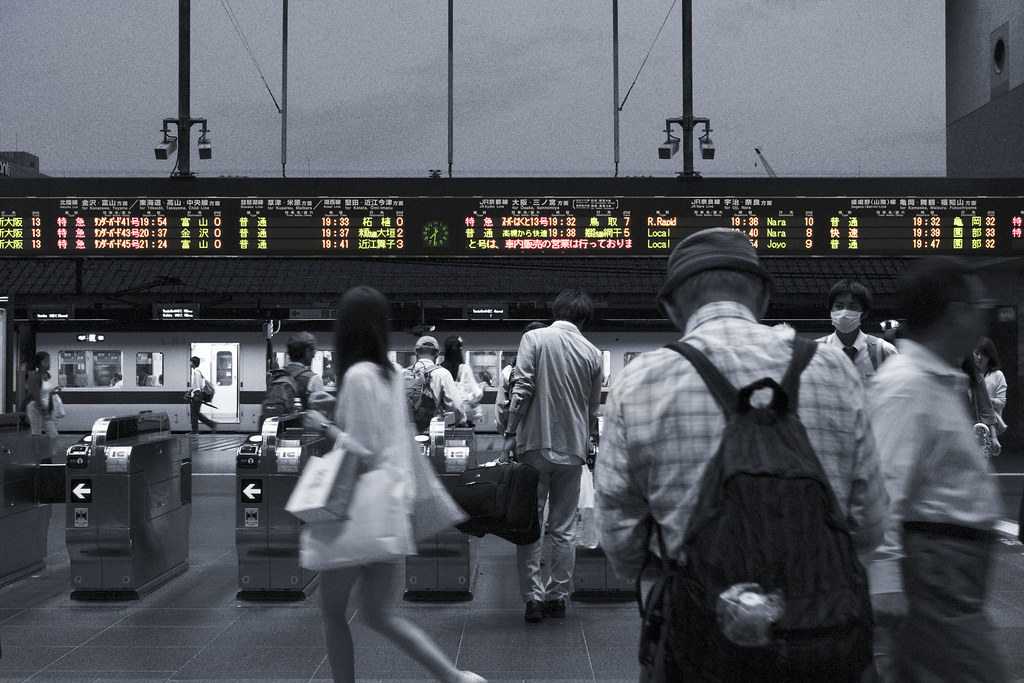
Commuters navigate the bustling Kyoto Station, where the convergence of tradition and modernity is captured in a single frame, illustrating the dynamic flow of urban life. Link to original. Licensed under CC BY-SA.
Kyoto Station is a marvel of glass and steel — an architectural counterpoint to the city’s temples. Beneath its vast atriums, monks, commuters, and travelers converge, turning this modern hub into a theater of movement and reflection.
Why Kyoto Station?
The interplay of geometry, transparency, and human flow creates scenes rich in abstraction. It’s one of Kyoto’s few places where modern architecture doesn’t clash with tradition but extends it — through rhythm, symmetry, and ritualized motion.
Insider Advice
Shoot from upper walkways overlooking the concourse for dramatic perspectives. Early morning light cuts through the glass roof like stage lighting; evening reflections turn commuters into silhouettes of story and purpose.
Photography Tip
Use reflections creatively — walls, escalator panels, and windows act as natural mirrors. Combine symmetry with human presence to balance architecture and emotion.

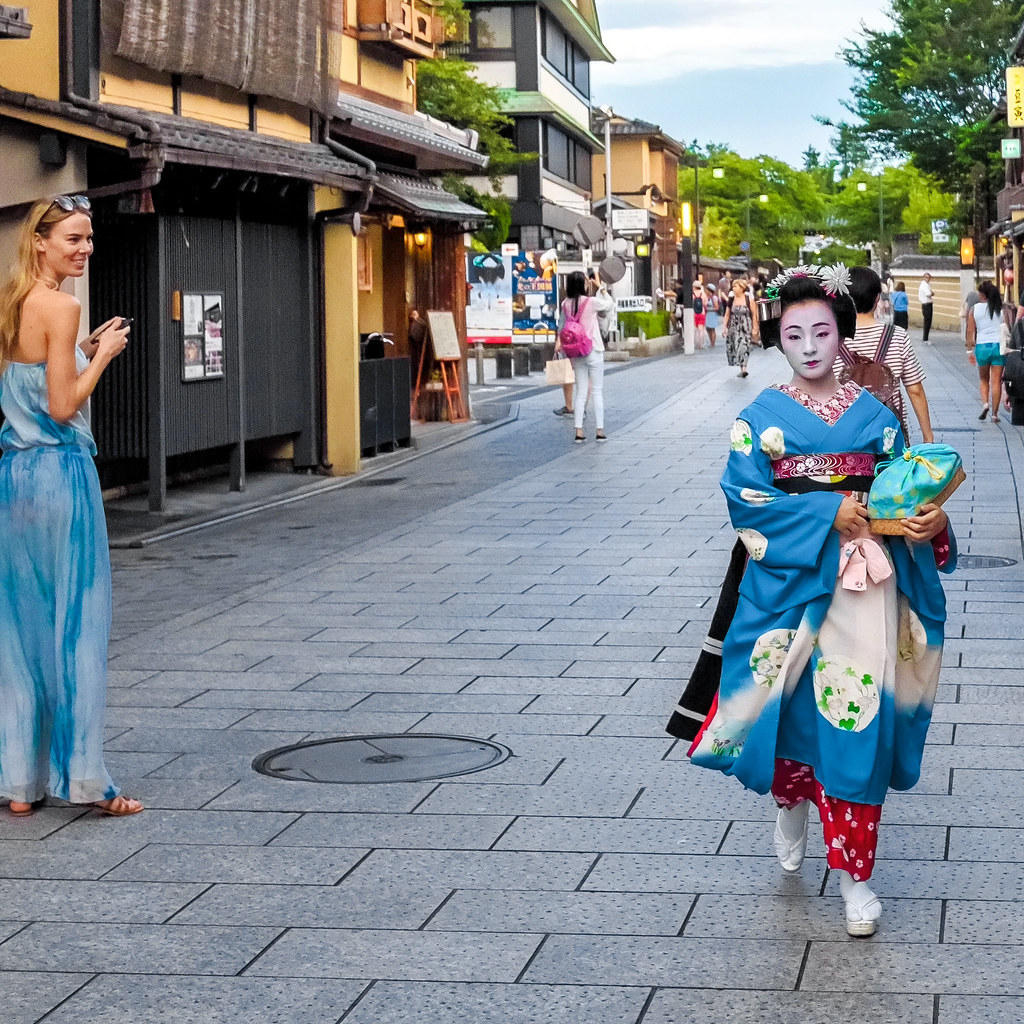
A traditionally dressed woman walks through the historic streets of Gion District in Kyoto, capturing the cultural essence amidst modern onlookers. Link to original. Licensed under CC BY-ND.