Monochrome Magic: Silhouettes and Stories at Broadway Tower
In a world overflowing with color, it’s often the stark simplicity of black and white that most deeply captures our hearts and imaginations.
Table of Contents
- The Captivating Contrast of Silhouettes
- A Lesson in Composition
- Creating Mood with Monochrome
- Takeaway Tips for Your Photography Journey
- Exploring New Dimensions
- Inspiration from Everyday Scenes
The Captivating Contrast of Silhouettes
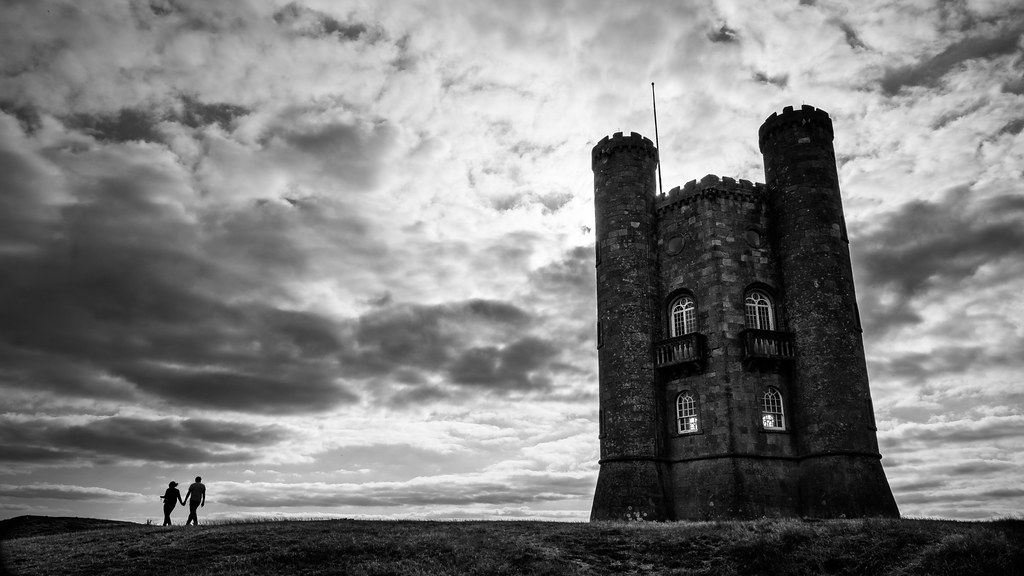
What strikes first about this photo is its masterful use of silhouettes. The couple, reduced to pure outline, radiates warmth and human connection—an emotional counterpoint to the tower’s cold, imposing structure. The juxtaposition is powerful: intimacy and history sharing the same frame, each amplifying the presence of the other.
The technique is especially striking because it layers two distinct silhouettes. The couple is rendered in complete shadow, drawing focus and intimacy, while the tower allows partial detail through its windows. That duality adds depth and tension while preserving a timeless quality.
A Lesson in Composition
For those learning to photograph Broadway Tower in England—or honing their eye in travel photography more broadly—this image is an ideal study in composition. Note how both subjects, the couple and the tower, occupy opposite sides of the frame. Each holds its ground yet contributes to a unified whole.
The balance is deliberate: the viewer’s eye moves naturally between the figures and the structure, guided upward into the dramatic sky, which unfurls like painted brushstrokes across the scene. It’s a composition that feels effortless but is anything but accidental.
Creating Mood with Monochrome
Black and white photography distills a scene to its essence. Stripped of color, only form, light, and emotion remain—and this photo shows why monochrome endures. Shadows ripple across the grass, footsteps echo visually, and the couple’s walk becomes a meditation on journeys both literal and metaphorical.
When traveling, consider approaching your own scenes this way: ask whether color adds or distracts. Often, removing it reveals mood and meaning you might otherwise miss. In the language of storytelling, sometimes less truly is more.
Takeaway Tips for Your Photography Journey
-
Embrace Silhouettes: Use them deliberately to heighten drama and direct attention.
-
Juxtapose Elements: Pair warmth and coldness, human and monumental, to create tension and narrative within your frame.
-
Experiment Boldly: Don’t relegate monochrome to the past. In a world saturated with color, black and white can surprise, refresh, and elevate your storytelling.
Exploring New Dimensions
Photography isn’t simply about documenting what we see—it’s about interpreting how a moment feels. Silhouettes and contrasts invite layers of emotion and invite viewers deeper into the story. Look for those moments when shadow and light conspire to suggest something larger than the scene itself.
At Broadway Tower—or anywhere else—let natural elements become collaborators in your work. Clouds, angles of light, even the direction of footsteps can all expand the dimensions of your photograph.
Inspiration from Everyday Scenes
Perhaps the greatest reminder this photo offers is that extraordinary images often come from ordinary scenes. A couple walking past a tower is hardly dramatic on its own—but through thoughtful timing and composition, it becomes a study in romance, history, and atmosphere.
Next time you’re out with your camera, pause. Observe closely. The interplay of people, architecture, and light is happening all around you—waiting to be framed into something unforgettable.
In the end, whether your goal is to master travel photography or simply capture moments that matter, let this image inspire you. Seek contrasts, embrace silhouettes, and remember: the details you choose to notice and frame are what elevate snapshots into art.

Silhouetted against a dramatic sky, Broadway Tower stands tall as two figures walk hand in hand, capturing a moment of timeless romance and mystery. Photo by Giuseppe Milo. Licensed under CC BY.