Seven Reasons Not to Skip Fez on Your Trip to Morocco
We’re always suprised—and a little bit sad—when travelers head to Morocco and leave Fez off their list.
Fez (Fes) is Morocco’s cultural heartbeat—a city that feels both eternal and alive in every moment. Here, medieval lanes wind past artisan workshops and mosaicked fountains, each turn revealing another layer of history. For travelers and photographers craving depth, texture, authenticity, adventure, and delight, Fez delivers a sensory tapestry unlike anywhere else in the world. Its magic lies not just in what you see, but in how it makes you feel—immersed, inspired, and woven into a living story.
Why would you skip it?
Table of Contents
- The World’s Largest Living Medieval Medina
- Authentic Craftsmanship and Artisanship
- Cultural and Intellectual Legacy
- Architectural Treasures
- A More Traditional Atmosphere than Marrakech
- Unforgettable Food Scene
- Immersive Cultural Experiences Beyond the Sights
- Conclusion: Fez Rewards the Curious
The World’s Largest Living Medieval Medina
Fez el-Bali, a UNESCO World Heritage Site, is a car-free labyrinth of more than 9,000 lanes, alleys, and passages—the largest inhabited car-free zone on the planet. It’s a rare place where you can lose yourself in a functioning medieval city. Expect hidden squares, hand-carved fountains, and souks that shift character with every turn. (You may think you know what a souk is, but this one tops all the others.)
Authentic Craftsmanship and Artisanship
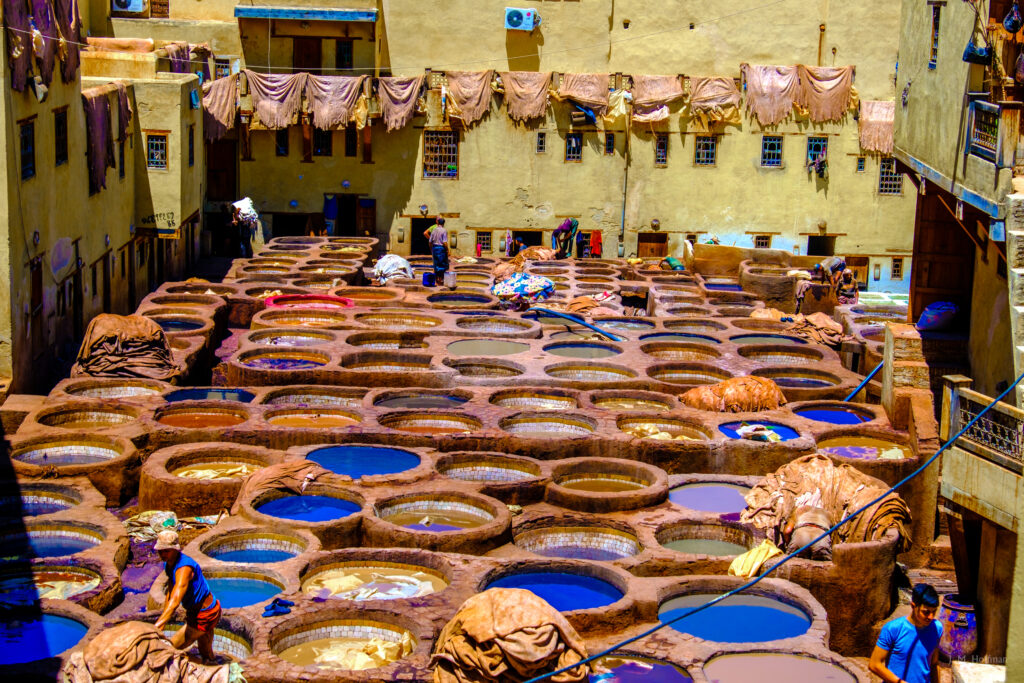
In the heart of Fez, the Chouara Tannery blooms with vibrant colors and ancient rhythms, where leather is dyed under the sun’s watchful gaze. This age-old craft breathes life into stone vats, whispering stories of tradition and time. Photo by Joel M. Hoffman. Copyright Joel M. Hoffman. Used with permission.
Fez is Morocco’s craft capital. Watch master leatherworkers, zellij tile cutters, brass engravers, weavers, and potters practicing techniques handed down through generations. The iconic Chouara Tannery, with its honeycomb of dye vats, remains one of the most distinctive and photogenic craft scenes in the world.
Cultural and Intellectual Legacy
Founded in 859, Al Quaraouiyine is widely recognized as the world’s oldest continually operating university. Fez’s madrassas, libraries, and scholarly traditions lend the city a quiet gravitas—felt in shaded courtyards and along narrow bookbinder streets where learning remains a living craft.
Architectural Treasures
The Bou Inania Madrasa’s carved cedar and green-tiled minaret, the Andalusian Mosque’s austere elegance, and countless riads adorned with intricate stucco and shimmering zellij showcase Moroccan–Andalusian design at its peak. Every wall, doorway, and fountain plays with pattern, texture, and light.
A More Traditional Atmosphere than Marrakech
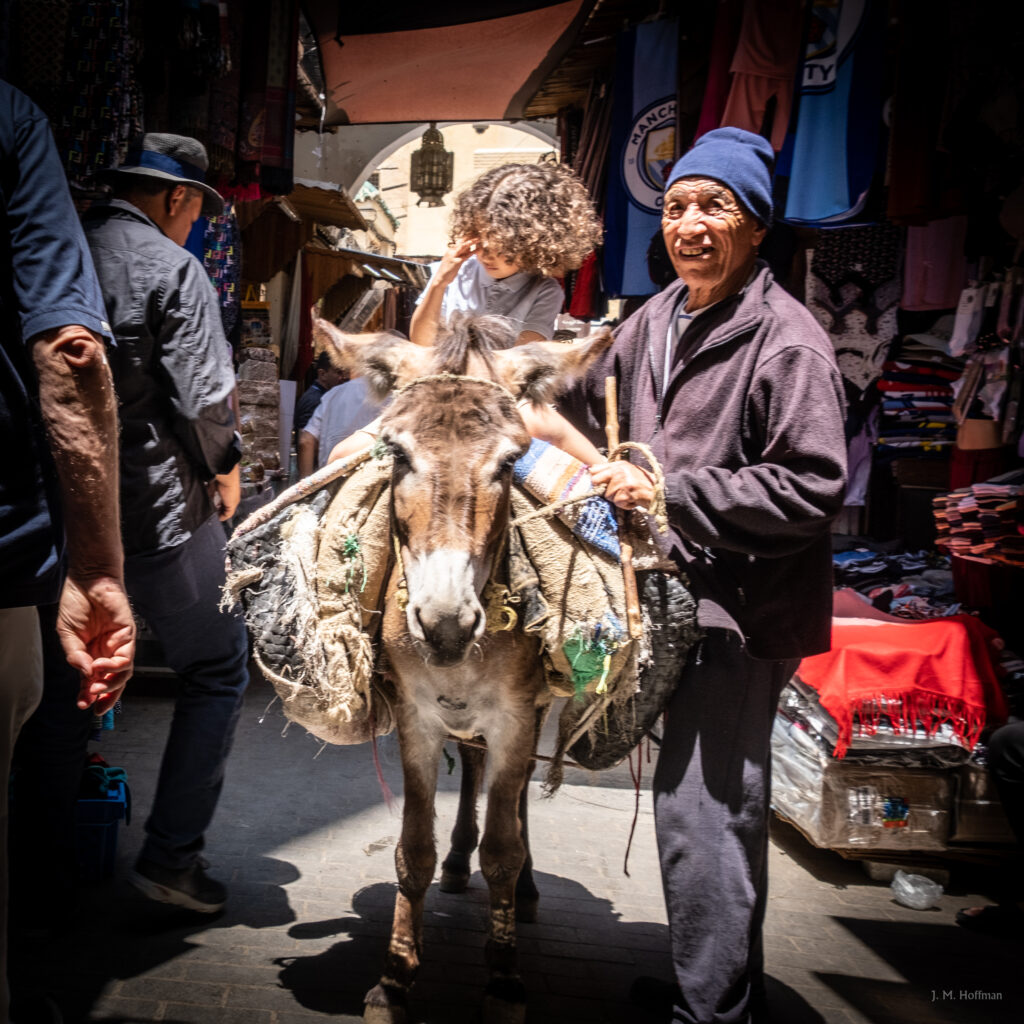
In the bustling heart of Fez’s Medina, a man leads his donkey through sun-dappled alleys, a child perched joyfully on top, embodying the timeless dance of tradition and life. Photo by Joel M. Hoffman. Copyright Joel M. Hoffman. Used with Permission
While Marrakech dazzles with spectacle, Fez moves to the rhythm of local life. Merchants haggle in Dar Batha’s shadow, bakers pull loaves from communal ovens, and donkeys still ferry goods through the medina. The pace invites slower, deeper travel.
Here, the medina feels less like a stage and more like a neighborhood. Souks cater primarily to locals, selling spices in bulk, hand-hammered cooking pots, and wild herbs from the surrounding hills. Apprentices still learn their craft from master artisans—a tradition increasingly rare in other cities.
Nights in Fez are hushed, intimate—punctuated by the haunting call to prayer echoing through darkened alleys rather than the thump of rooftop DJ sets. Immersion here isn’t curated; it’s organic. The city keeps its own tempo, with or without an audience.
And because no cars, scooters, or motorcycles are allowed inside the medina, strolling its lanes is infinately more enjoyable than in Marrakech.
Unforgettable Food Scene
Fez excels in the art of sweet–savory balance: pigeon or chicken pastilla, fragrant tagines, hand-rolled couscous, and centuries-old pastry traditions. Cooking classes and family-run restaurants invite you into kitchens where recipes are guarded and shared with pride. You can even get camel meat if that’s your thing. You can also get high-end chocolate and European standards. It’s all there.
Immersive Cultural Experiences Beyond the Sights
Fez offers more than landmarks—it offers entry points into everyday life. Join a bread-making session in a neighborhood oven, learn the rhythms of Andalusian music in a private courtyard, or sit with an artisan at their workbench. These encounters create stories—and photographs—that no guidebook can promise.
Conclusion: Fez Rewards the Curious
Fez is not a city you “do” in a day—it’s a slow-burn masterpiece. Come for the medina and the artisans; stay for the scholarship, architecture, and flavors. Leave with images and memories rooted in one of the world’s most enduring cultural capitals. Marrakech may captivate with its theatrical energy, but Fez reveals itself like a book best read slowly, page by page. Skipping Fez means missing Morocco at its most authentic.

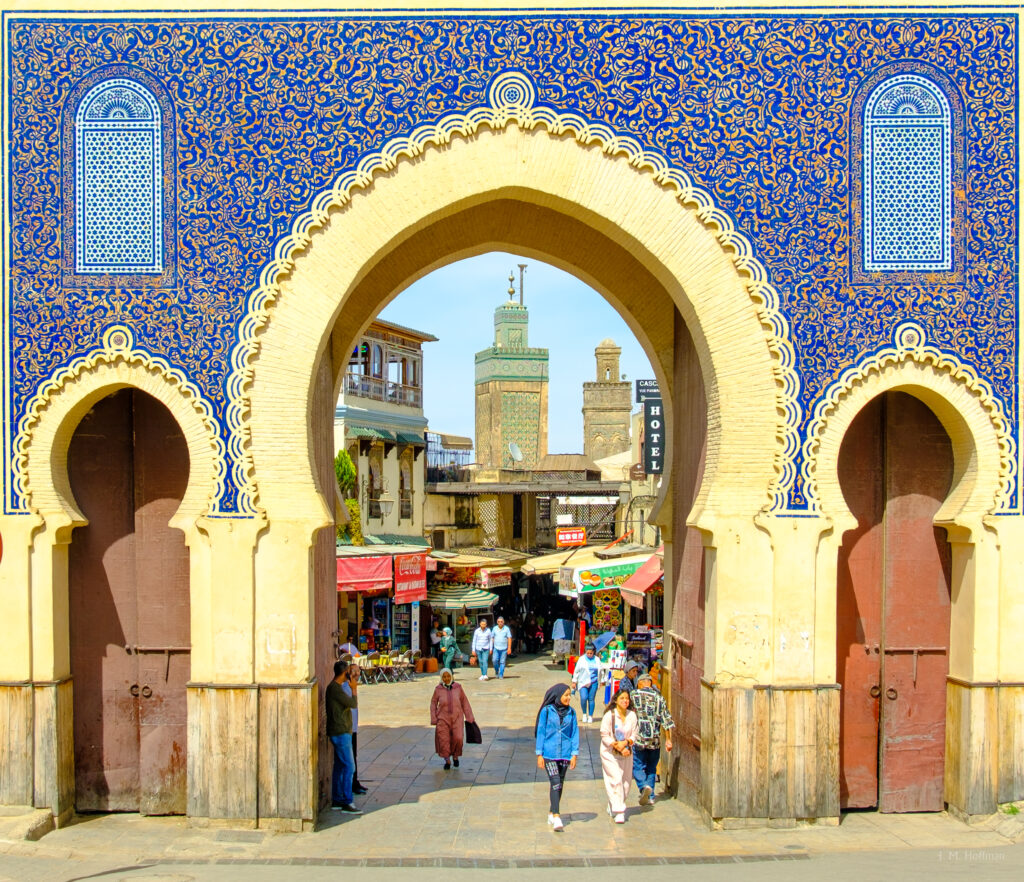
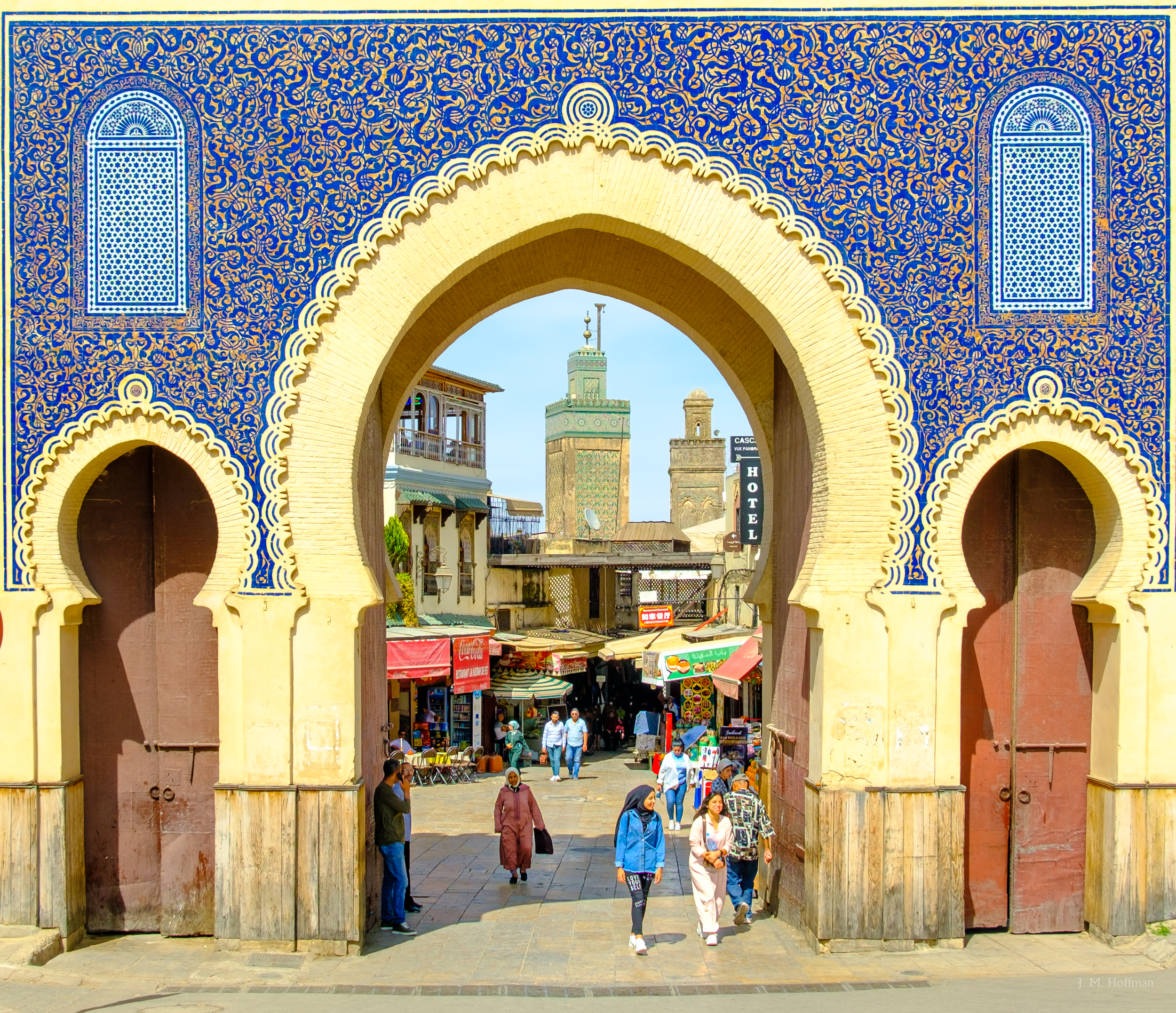
The vibrant blue and intricate patterns of the Bab Bou Jeloud, or Blue Gate, welcome visitors into the heart of Fes, Morocco’s ancient medina. Photo by Joel M. Hoffman. Copyright Joel M. Hoffman. Used with Permission