Los Angeles Architecture Photography: The Best Angles in the City of Angels
Concrete, steel, and glass compose an architectural symphony in Los Angeles—replete with stories of ambition and artistry and grit. Here are eight of the best places for architecture photography in the famed City of Angels.
Table of Contents
- The Getty Center
- Walt Disney Concert Hall
- Bradbury Building
- Griffith Observatory
- Union Station
- The Broad
- Los Angeles City Hall
- The Petersen Automotive Museum
- Conclusion
The Getty Center
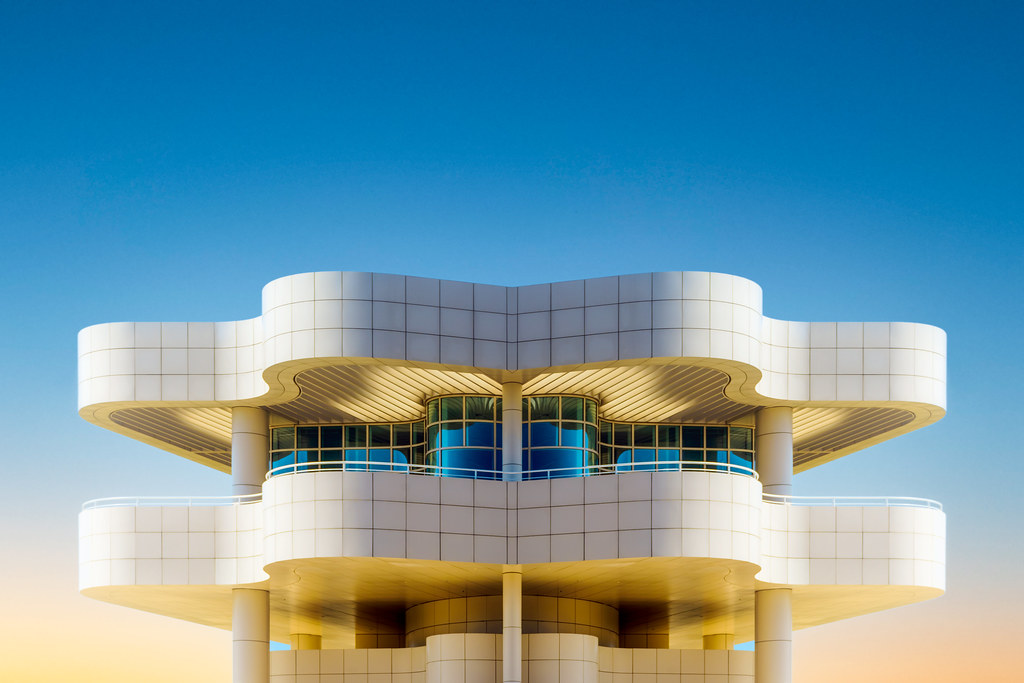
The Getty Center in Los Angeles showcases its modern architecture with sleek curves and a striking facade against a clear blue sky. Photo by Dale Cruse - Thanks for 10M views!. Licensed under CC BY.
Perched on a hilltop, the Getty Center is an architectural marvel designed by Richard Meier. Its modern design and breathtaking views offer an unparalleled experience for those interested in capturing lines, shapes, and light.
Why Visit
The Getty Center’s remarkable structure features travertine stone and curved metal panels that respond beautifully to natural light. This is arguably the best photo spot for architecture photography enthusiasts looking to explore modern design against a backdrop of lush gardens.
Insider Advice
Visit during the late afternoon when the setting sun casts dramatic shadows across its surfaces. This time provides ideal conditions for capturing warm tones.
Photography Tip
Use the leading lines of railings or pathways to guide viewers’ eyes through your composition, creating depth in your images.
Walt Disney Concert Hall
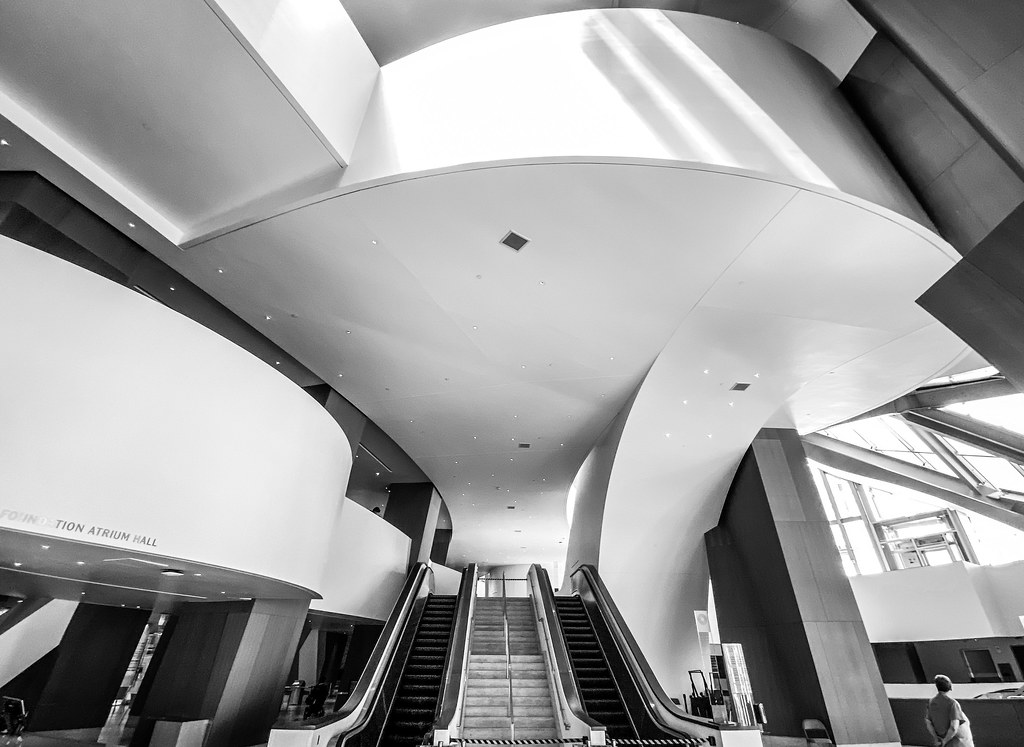
A striking black and white capture of the Walt Disney Concert Hall’s interior, showcasing its sweeping curves and modern architectural elegance. Photo by Kevin Dooley. Licensed under CC BY.
Designed by Frank Gehry, this iconic concert hall offers fluid curves that seem to dance with reflections from surrounding buildings—a sight no architecture photographer should miss.
Why Visit
The reflective stainless steel surface not only transforms with changing light but also adds an abstract element to photographs—perfect for creative compositions that highlight dynamic forms.
Insider Advice
Early morning or late afternoon delivers softer light that helps control harsh reflections on its metallic skin—ideal times for shooting here without overexposing highlights.
Photography Tip
Experiment with angles: standing close can exaggerate curves, while stepping back allows you to capture its full grandeur within the urban context.
Bradbury Building
Step into this downtown Los Angeles landmark, where Victorian-era design meets intricate wrought ironwork beneath a soaring glass atrium. The Bradbury Building is a favorite among architecture photographers for its rich textures, layered perspectives, and timeless interior details.
Why Visit
Known for its ornate staircases, open-cage elevators, and sun-drenched walkways, the Bradbury Building offers a rare blend of historical depth and architectural drama—making it one of L.A.’s most photogenic interiors.
Insider Advice
Visit around midday when natural light filters through the atrium, casting dramatic shadows and highlighting the building’s intricate metalwork. Ideal conditions for high-contrast or black-and-white photography.
Photography Tip
Embrace symmetry to showcase the Bradbury’s repeating patterns, layered balconies, and geometric staircases. A centered composition amplifies the visual rhythm and architectural balance.
Griffith Observatory
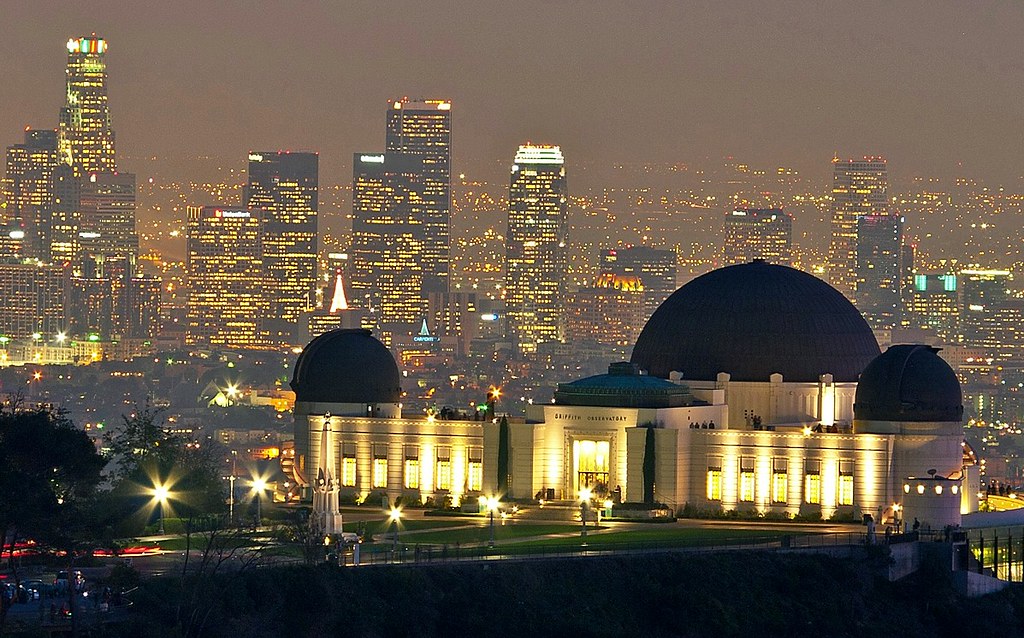
Perched high above Los Angeles, Griffith Observatory blends sweeping city views with striking Art Deco architecture. Its sculpted lines and celestial motifs draw the eye skyward, making it a favorite destination for photographers chasing both grandeur and geometry—by day or night.
Why Visit
Griffith Observatory pairs scientific intrigue with architectural elegance. Its iconic domes, vintage telescopes, and backdrop of downtown L.A. and the Hollywood Sign offer dynamic opportunities for architectural and landscape photography alike.
Insider Advice
Arrive during golden hour for soft, directional light that flatters the building’s form. Stay through sunset to capture the city lights coming alive below—an ideal contrast for dusk-to-night transitions.
Photography Tip
Use foreground elements like trees, railings, or hillside trails to frame the observatory and add scale. Wide-angle shots can emphasize the dramatic setting, while tight crops reveal the Art Deco details.
Union Station
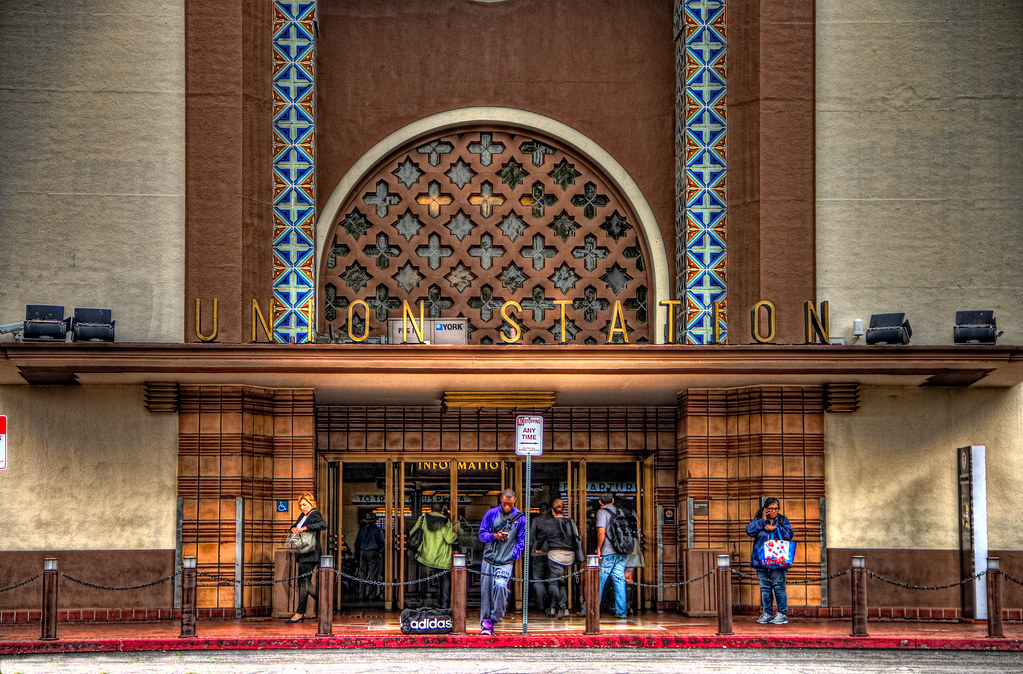
The vibrant architecture of Union Station in Los Angeles is enhanced by subtle HDR effects, bringing the scene and its diverse array of people to life with vivid detail. Photo by John Bauder. Licensed under CC BY.
Union Station is a living piece of Southern California history, blending Spanish Colonial Revival and Art Deco design into one of Los Angeles’s most photogenic transit landmarks. Its architecture captures the spirit of old L.A. while remaining a dynamic hub of movement and style.
Why Visit
Inside, the grand waiting room showcases soaring ceilings, bronze chandeliers, and terracotta tile floors—an elegant mix of Mission-style warmth and Deco geometry. Outside, palm-lined courtyards and garden paths add lush contrast, offering photographers a rich variety of textures and tones.
Insider Advice
Visit early in the morning for quiet, unobstructed access to both interior and exterior spaces. The soft natural light and reduced foot traffic make it easier to frame clean, atmospheric shots.
Photography Tip
Bring a wide-angle lens to fully capture the station’s scale—from the expansive arches to the intricate floor details. Position yourself low and centered for a dramatic, immersive composition that draws the viewer into the scene.
The Broad
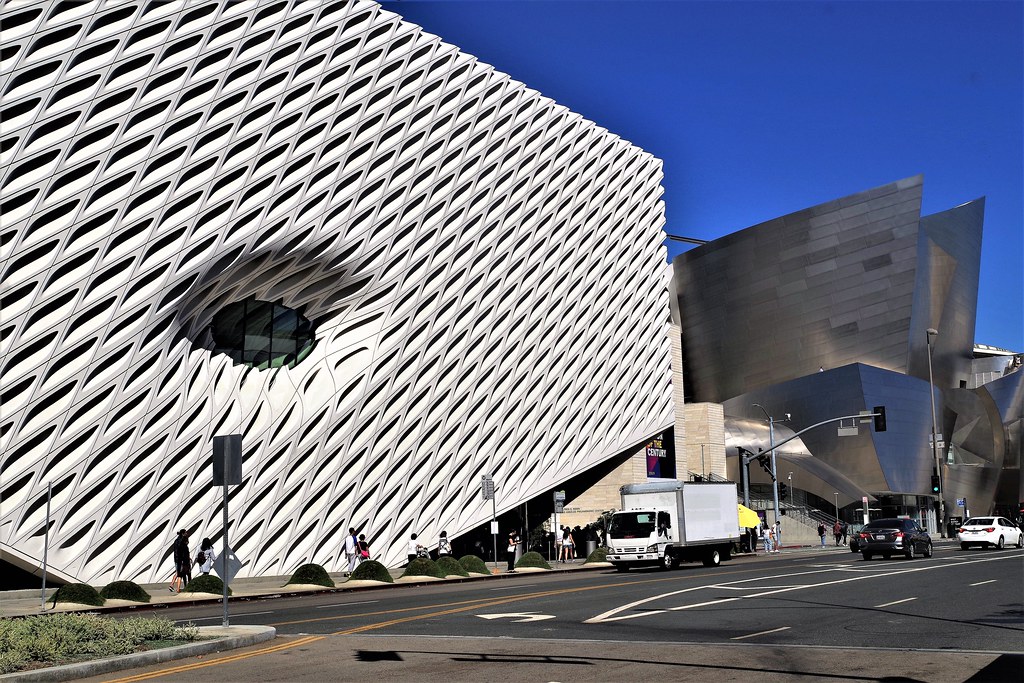
The Broad museum in Los Angeles showcases its distinctive honeycomb-like exterior design alongside the metallic curves of the Walt Disney Concert Hall. Photo by joey zanotti. Licensed under CC BY.
Designed by Diller Scofidio + Renfro in collaboration with Gensler, The Broad Museum is as much a work of art as the contemporary pieces it houses. Its signature “veil-and-vault” design combines minimalist form with striking architectural presence, offering photographers bold geometry both inside and out.
Why Visit
The museum’s honeycomb-like exterior isn’t just structural—it creates dynamic textures and patterns that shift with the light. During the day, its perforated facade casts dramatic shadows that bring depth and rhythm to your images, perfectly complementing its clean, modern lines.
Insider Advice
Overcast days are ideal for shooting The Broad. Diffused lighting minimizes glare on the glass surfaces and enhances contrast, making it easier to capture crisp architectural details with consistent results.
Photography Tip
Use the exoskeleton’s repeating patterns as natural framing tools. Align them with your subject or horizon to create depth and continuity, turning abstract design into a powerful compositional asset.
Los Angeles City Hall
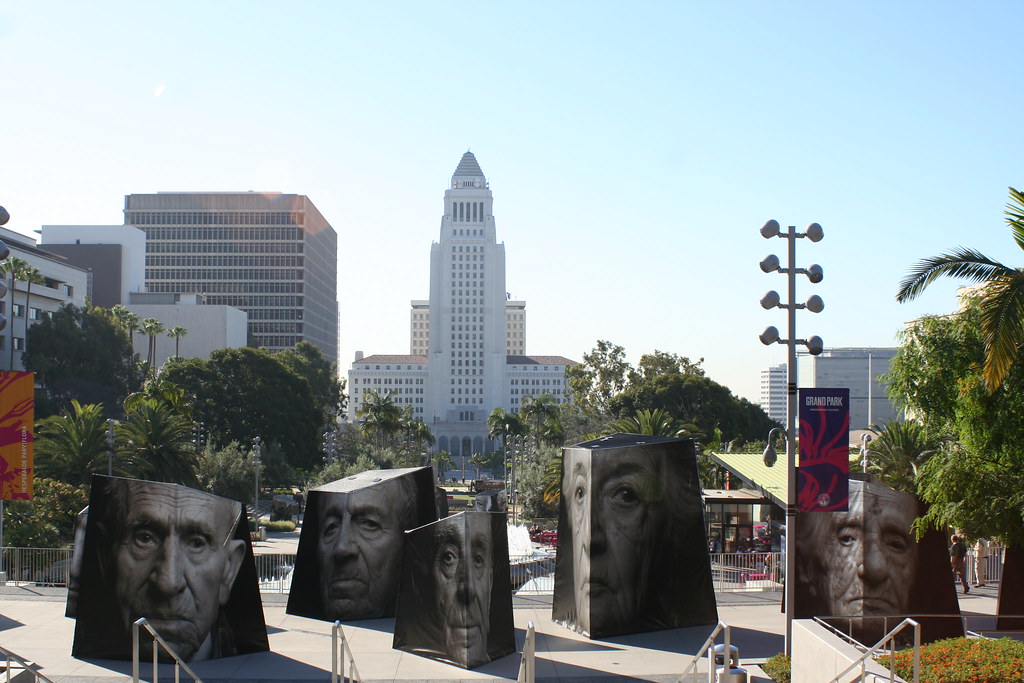
City Hall in Los Angeles stands tall and imposing in the background, contrasting perfectly with the expressive installation art in Grand Park’s foreground, creating a dynamic visual interplay between civic architecture and contemporary creativity. Photo by Brian Champlin. Licensed under CC BY.
An iconic example of American Modern architecture, Los Angeles City Hall stands as a towering emblem of civic identity and historic ambition. Its distinctive silhouette has graced the skyline since the 1920s, making it a must-visit for photographers drawn to architectural heritage and timeless design.
Why Visit
City Hall’s tapered form, vertical emphasis, and ornate detailing reflect the elegance of its era. Set amid a sea of modern skyscrapers, it offers striking contrasts—perfect for capturing the tension between historic craftsmanship and contemporary urbanism.
Insider Advice
Shoot in late afternoon when golden light enhances the building’s relief carvings and casts long, dramatic shadows across its facade—ideal for adding depth and mood to your compositions.
Photography Tip
Use low-angle shots to emphasize the building’s height and grandeur, or step back and frame it against modern structures for a layered cityscape. Negative space and sky can help balance the composition and underscore its monumental presence.
The Petersen Automotive Museum
Wrapped in dramatic stainless steel ribbons that twist around bold red paneling, the Petersen Automotive Museum—designed by Kohn Pedersen Fox Associates—is one of L.A.’s most visually arresting buildings. Its futuristic facade makes it a must-shoot location for photographers drawn to bold, high-impact architecture.
Why Visit
The museum’s flowing exterior evokes speed, motion, and innovation—perfectly echoing the spirit of the vehicles housed inside. It offers photographers a rare blend of sculptural form and vibrant color that captivates from every angle, inside and out.
Insider Advice
Overcast skies are ideal for shooting the Petersen. Diffused light minimizes glare and reflections on the metal surfaces, bringing out textures and contours while ensuring smooth, consistent tones in your final shots.
Photography Tip
Highlight the building’s sculptural curves by using tight crops and abstract angles. Focus on the interplay of steel and color to convey motion and energy—turning architectural details into compelling visual stories.
Conclusion
Los Angeles is a dream destination for architecture photographers, offering an eclectic mix of styles—from the futuristic curves of the Walt Disney Concert Hall to the timeless elegance of Union Station and the intricate charm of the Bradbury Building. Each structure tells a story, making the city a living gallery of design, history, and visual intrigue.
Whether you’re drawn to minimalist lines, ornate facades, or dramatic contrasts, this guide highlights the best places in L.A. to capture architecture at its finest. Be mindful of lighting, experiment with angles, and balance wide shots with close-up details to bring each building’s character to life through your lens.
Pack your gear, chase the light, and let Los Angeles inspire your next great shot.
Happy shooting!

The Griffith Observatory stands illuminated against the backdrop of the Los Angeles skyline, offering a stunning view of the city’s nightscape. Photo by Ron Reiring. Licensed under CC BY.