Complete Guide to Visiting Morocco: Welcome to the Jewel of North Africa
Morocco, where Africa brushes against Europe, greats visitors with striking contrasts and timeless charm. From the winding alleys of the ancient medians and the endless sands of the Sahara to sun-soaked coastlines and the rugged Atlas Mountains, it offers a sensory feast of history, culture, and modern dynamism. Cities like Marrakech and Fez pulse with centuries-old vitality, while Casablanca and Rabat reflect Morocco’s evolving identity. Rooted in Berber, Arab, and French traditions, the country radiates warmth, hospitality, and an irresistible blend of the old and the new.
Table of Contents
- Discovering the Allure of Morocco: Why You Should Visit
- Tracing the Threads of Time: A Brief History of Morocco
- Exploring the Diverse Cities and Regions of Morocco
- Savoring the Flavors: Dining in Morocco
- Finding Your Haven: Lodging Options in Morocco
- Unveiling Morocco’s Treasures: Don’t-Miss Sites
- Choosing the Perfect Season: Best Times to Visit Morocco
- Embarking on Your Journey: Getting to Morocco
- Essential Insights: Good Information to Know About Morocco
- Concluding Your Journey: The Magic of Morocco
Discovering the Allure of Morocco: Why You Should Visit
Morocco is where ancient customs meet modern creativity—a kaleidoscope of experiences that awaken every sense. From chaotic souks to serene desert landscapes, this North African gem beckons travelers in search of both adventure and reflection. Here are a few reasons why Morocco belongs on your bucket list.
A Cultural Mosaic
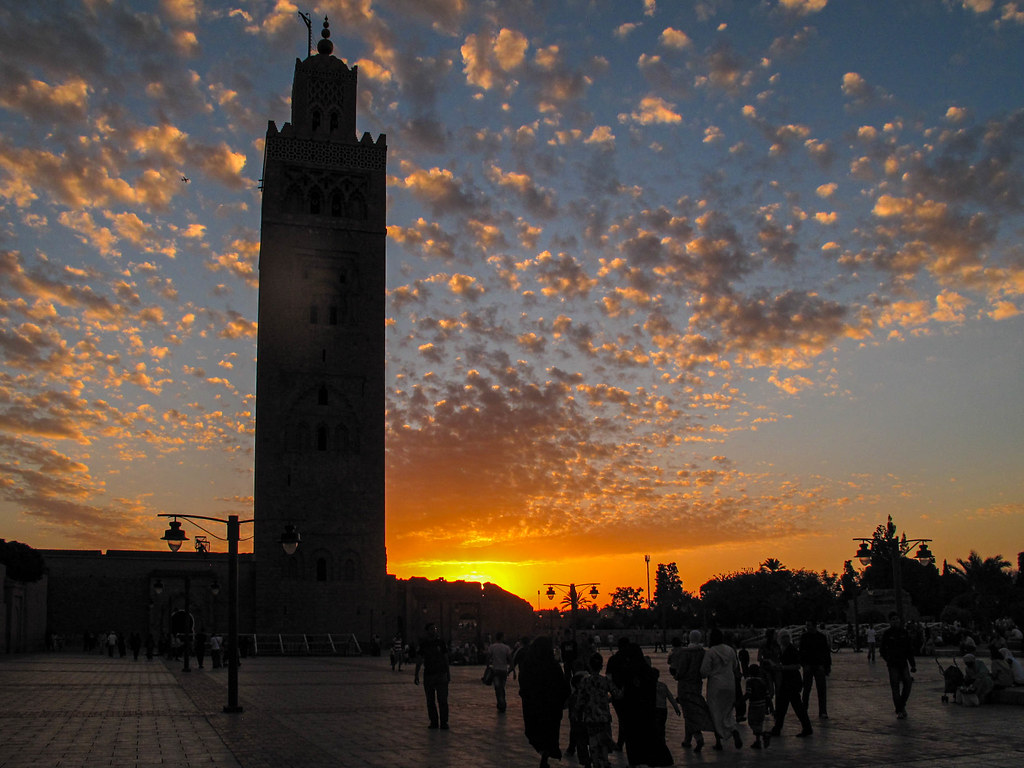
The Kutubiyya Mosque in Marrakech stands majestically against a vibrant sunset, embodying the rich tapestry of Morocco’s history and architectural diversity. This iconic landmark serves as a testament to the country’s cultural heritage and enduring allure. Photo by Forbes Johnston. Licensed under CC BY.
Morocco’s heritage is a vibrant fusion of Berber, Arab, and French influences, expressed through its architecture, language, cuisine, and daily life. Cities like Fez and Marrakech feel like open-air museums, where every alley and archway tells a story layered with time.
Natural Wonders
From the snowy peaks of the Atlas to the shifting dunes of the Sahara, Morocco’s landscapes are as diverse as they are breathtaking. Hike through lush valleys, camp beneath stars, or trek across sand seas on camelback—each terrain offers its own flavor of awe.
Culinary Delights
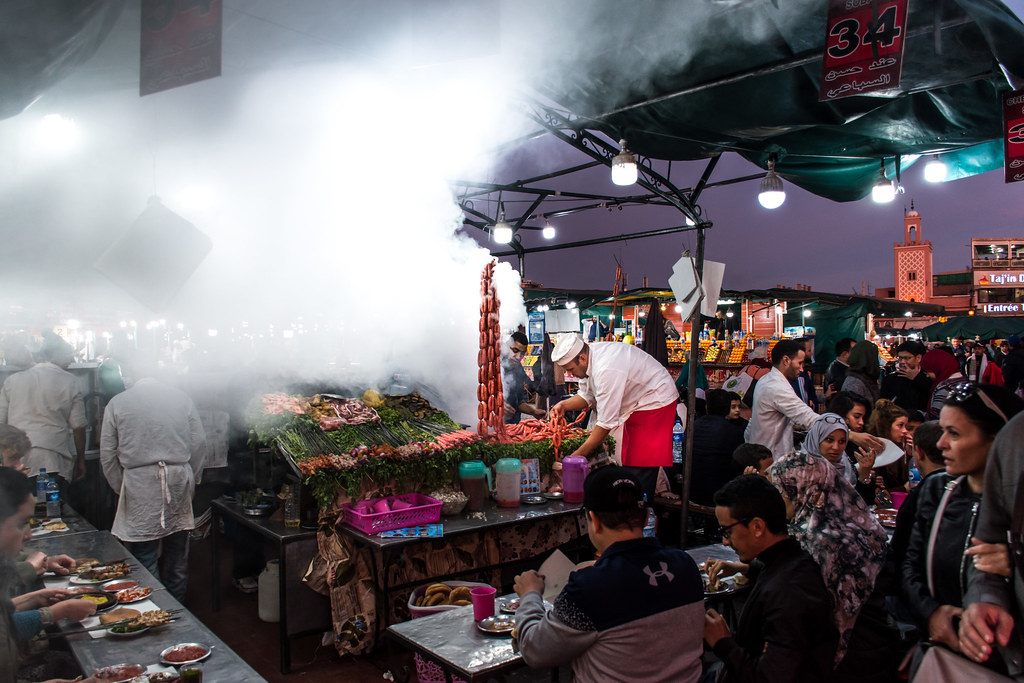
A bustling scene at Jemaa el-Fnaa in Marrakesh captures the vibrant energy and aromatic allure of its famous evening food stalls, where locals and tourists alike gather to savor traditional Moroccan delights. Photo by Ralf Steinberger. Licensed under CC BY.
Moroccan food is a celebration of spice, aroma, and slow-cooked artistry. Savor fragrant tagines, sample sweet-savory pastilla, and discover a cuisine where every dish is an invitation to taste history.
Architectural Marvels
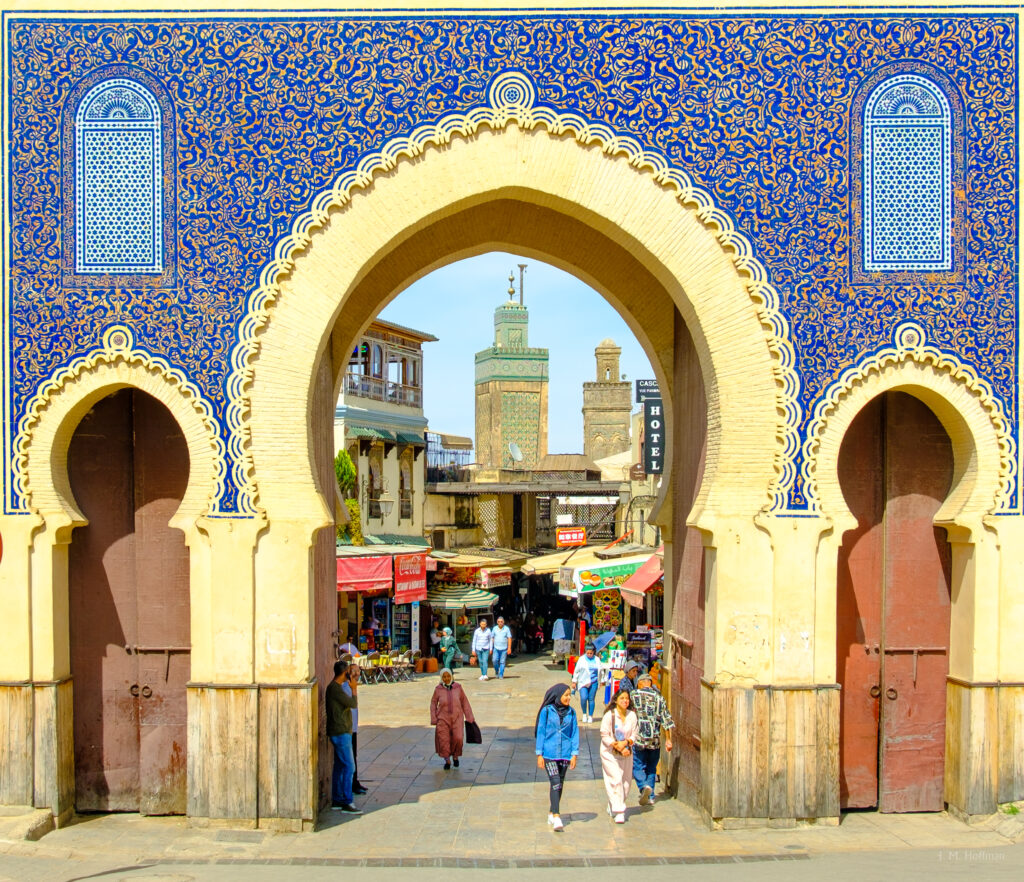
The vibrant Bab Bou Jeloud, or Blue Gate, serves as the iconic entrance to the bustling medina of Fez, Morocco. Its intricate tilework and arches invite visitors into a world of historical charm and lively markets. Photo by Joel M. Hoffman. Copyright Joel M. Hoffman. Used with permission.
Whether it’s the hand-carved stucco of a Marrakech riad or the grandeur of Casablanca’s Hassan II Mosque, Moroccan architecture blends form and faith with stunning elegance. Every courtyard and minaret seems designed to inspire wonder.
Warm Hospitality
Moroccans are renowned for their generosity and welcome. From a simple cup of mint tea to an invitation into a family home, the country’s culture of hospitality turns visitors into honored guests.
Morocco rewards curiosity with depth—promising moments that linger long after the journey ends.
Tracing the Threads of Time: A Brief History of Morocco
Strategically located at the gateway between Africa and Europe, Morocco’s story is one of resilience, diversity, and transformation. Its past is written by indigenous peoples, conquering empires, and enduring cultural exchanges.
Ancient Roots
The Berbers, Morocco’s original inhabitants, have shaped the region for millennia. Later, Carthaginians and Romans left their mark, weaving Morocco into the broader Mediterranean world.
The Rise of Islam
In the 7th century, Arab Muslims introduced Islam, laying the foundation for Morocco’s Islamic dynasties. The Idrisids built early Moroccan states, blending faith and governance in lasting ways.
Dynastic Changes
The medieval period saw the rise of empires—the Almoravids, Almohads, and Merinids—who constructed architectural masterpieces and turned cities like Marrakech into centers of art and learning.
Colonial Influence
In the 20th century, France and Spain imposed colonial rule. While these powers modernized infrastructure, they also sparked movements that led to Morocco’s eventual independence in 1956.
Modern Era
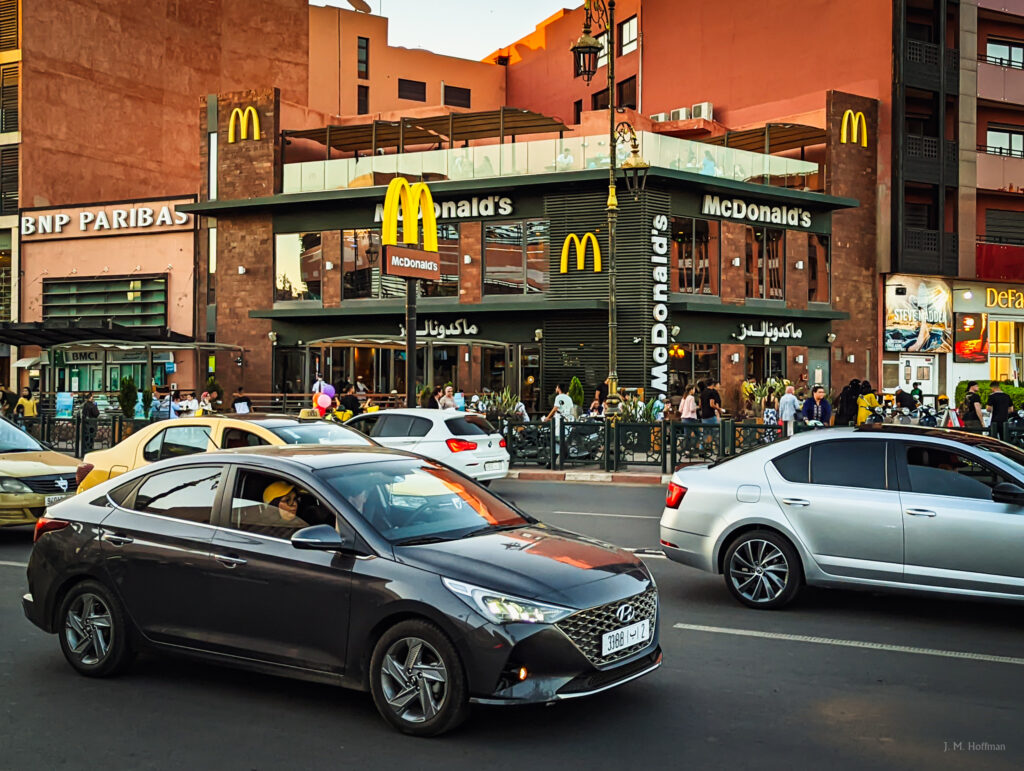
A bustling McDonald’s in Marrakech, Morocco, showcases a blend of modernity and local charm amidst the vibrant street life. Photo by Joel M. Hoffman. Copyright Joel M. Hoffman. Used with permission.
Post-independence Morocco has evolved into a constitutional monarchy, balancing deep traditions with aspirations for progress. Today it stands at the crossroads of heritage and innovation.
This rich legacy lives on—in its languages, architecture, and customs—offering travelers a living lesson in global history.
Exploring the Diverse Cities and Regions of Morocco
Morocco is not one story, but many—each region a distinct chapter shaped by centuries of trade, conquest, artistry, and faith. From the pulsating energy of imperial cities to the hushed mystery of desert nights, the country offers a breathtaking mosaic of experiences. Here are some of the places that best reflect Morocco’s extraordinary diversity.
Marrakech: The Red City
With its rose-hued ramparts and electrifying street life, Marrakech is Morocco at its most iconic. The city thrums with life—from the clatter of donkey carts to the call to prayer echoing across rooftops. Wander through the chaotic charm of the souks, visit ornate riads hidden behind plain doorways, and feel the pulse of Djemaa el-Fna as it transforms each evening into an open-air carnival of acrobats, fire-breathers, and food vendors. The Jardin Majorelle and Bahia Palace offer tranquil respites from the whirlwind beyond their walls.
Fez: The Spiritual Heart
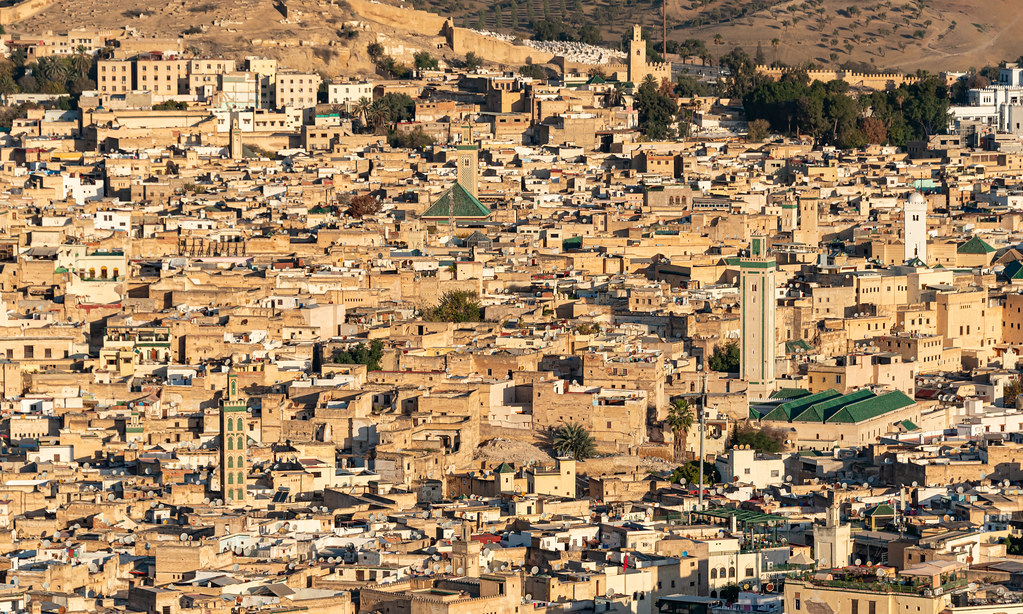
Aerial view of the historic medina in Fez, Morocco, showcasing its dense and intricate architecture with minarets rising above the labyrinthine streets. Photo by Jorge Franganillo. Licensed under CC BY.
A living museum of medieval Islam, Fez (or Fes) radiates with intellectual and spiritual gravity. Its labyrinthine medina, a UNESCO World Heritage Site, feels suspended in time—home to ancient fountains, artisan workshops, and the famed leather tanneries whose earthy hues stain the skyline. The University of Al-Qarawiyyin, founded in 859 CE, anchors the city’s scholarly legacy. As you pass through arched gates and tiled courtyards, the reverence for tradition is palpable in every brick and breath.
Casablanca: Modern Marvels
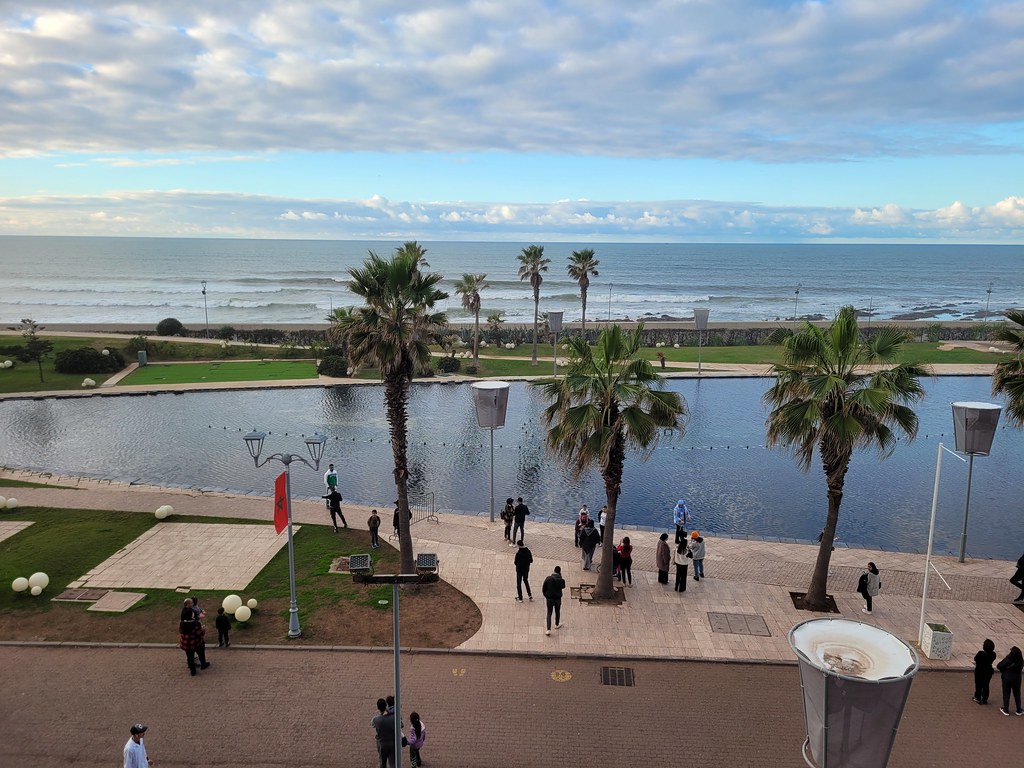
A serene view of the Casablanca seaside, where palm trees and a tranquil pond meet the vast expanse of the ocean under a partly cloudy sky. Visitors stroll along the promenade, enjoying the coastal ambiance. Link to original. Licensed under CC BY.
Morocco’s most modern metropolis, Casablanca is a city of sleek contrasts—where the past meets the present with confidence. The Hassan II Mosque, perched dramatically on the Atlantic, is one of the largest in the world, a triumph of Moroccan craftsmanship and engineering. Art Deco facades line wide boulevards, echoing French colonial influences, while rooftop lounges and bustling business districts reveal a city looking toward the future. It’s less touristy, more lived-in—and all the more fascinating for it.
Chefchaouen: The Blue Pearl
Nestled in the cool embrace of the Rif Mountains, Chefchaouen feels like a dream in cobalt. Its every surface—walls, steps, doorways—is bathed in blue, a color said to symbolize the sky and heaven. The town’s gentle rhythm invites lingering: browse artisan shops filled with woven blankets and hand-painted ceramics, sip mint tea in a shady courtyard, or hike to the Spanish Mosque at sunset for panoramic views of indigo rooftops melting into forested slopes. Chefchaouen is less a destination than a state of mind.
Sahara Desert: Endless Horizons
The Sahara is Morocco distilled to its essence: vast, timeless, humbling. Ride camelback into ochre dunes that shift with the wind, their contours glowing gold at sunrise and deep crimson at dusk. Sleep in a nomadic camp, where music and firelight soften the edges of the dark. Gaze up at a night sky so clear you feel the universe tilt around you. Here, in the silence and stillness, perspective expands. The desert doesn’t just offer beauty—it offers awe.
Essaouira: The Windy City
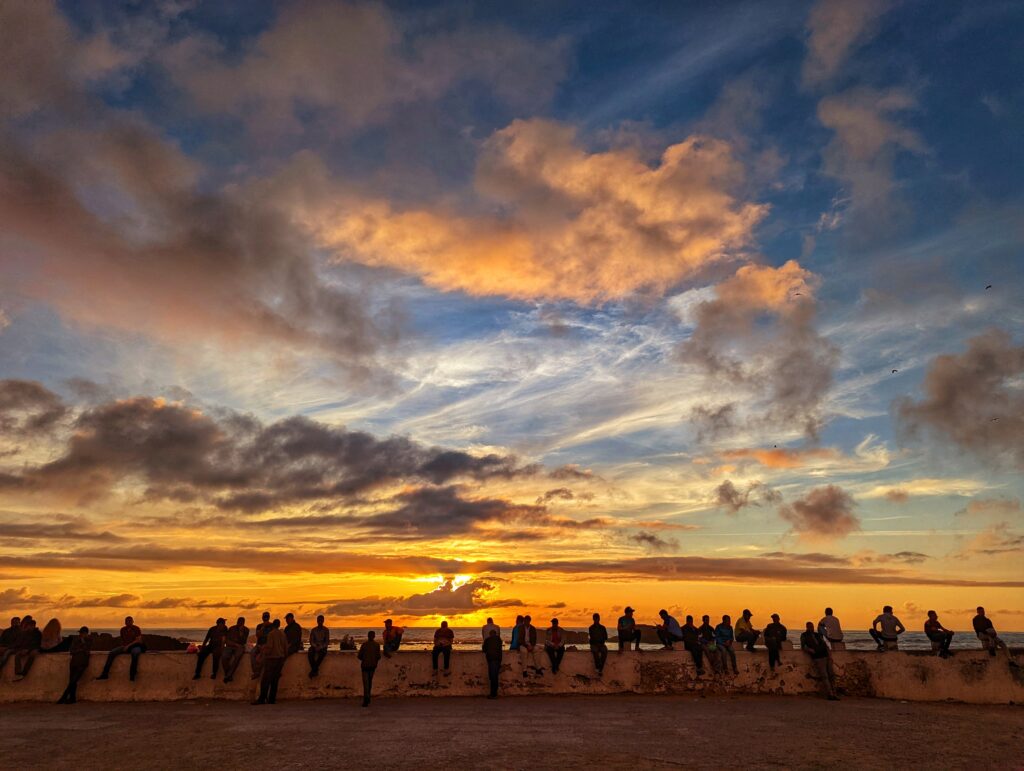
Silhouetted against a vibrant sunset, people gather along the waterfront in Essaouira, capturing a serene moment of reflection and beauty. Photo by Joel M. Hoffman. Copyright Joel M. Hoffman. Used with permission.
On Morocco’s Atlantic coast, Essaouira greets travelers with salty breezes, seagull cries, and the scent of grilled seafood drifting through whitewashed lanes. Once a haven for pirates and later a favorite of Jimi Hendrix, this laid-back port city pulses with creative energy. The fortified medina, edged by ramparts and cannons, offers a quieter, more contemplative counterpart to Marrakech. Inside, blue boats bob in the harbor, Gnawa music drifts from cafes, and artisan woodworkers turn cedar into art. With its slower rhythm and windswept charm, Essaouira is a place to exhale.
Atlas Mountains: Nature and Nomads
Dramatic clouds loom over the rolling hills and lush valleys of the Mid Atlas Mountains, creating a striking contrast between earth and sky. Photo by Joel M. Hoffman. Copyright Joel M. Hoffman. Used with permission.
Rising like a spine through the heart of Morocco, the Atlas Mountains are a realm of snow-dusted peaks, terraced valleys, and stone-built Berber villages clinging to hillsides. Here, time slows to the pace of mules and mountain air. The High Atlas offers trekking routes through dramatic scenery and the chance to summit Mount Toubkal, North Africa’s tallest peak. In the Middle Atlas, cedar forests shelter Barbary macaques and remote kasbahs. Whether you’re hiking through wildflower meadows or sipping tea in a mud-brick guesthouse, the Atlas reveals Morocco’s raw, rugged soul—quiet, enduring, and deeply rooted in the land.
Draa Valley: An Oasis of History
Far from the well-trodden tourist routes, the Draa Valley unfolds like a hidden ribbon of green between the Atlas Mountains and the desert. Fed by Morocco’s longest river, the valley is a chain of date palms, adobe kasbahs, and villages where ancient traditions endure. Life here flows at the pace of the river: slow, patient, enduring. The surrounding landscape—crimson cliffs, dry wadis, and bursts of cultivated land—tells a story of resilience. For those willing to wander off the beaten path, the Draa offers not only beauty, but a deep, unfiltered connection to Morocco’s agricultural and architectural heritage.
Ouarzazate: The Door of the Desert
Aït Benhaddou, a striking example of Moroccan earthen architecture, stands proudly under the vast sky, offering a glimpse into ancient Berber culture. Photo by Ralf Steinberger. Licensed under CC BY.
Often bypassed en route to the Sahara, Ouarzazate deserves more than a passing glance. Nicknamed the “Door of the Desert,” this cinematic town has served as the backdrop for countless films—from Lawrence of Arabia to Game of Thrones. The nearby Aït Benhaddou, a UNESCO-listed ksar of mud-brick dwellings, rises from the arid landscape like a mirage of medieval splendor. Studios, kasbahs, and wind-swept plains give Ouarzazate a surreal, theatrical quality—part real, part legend. It’s a place where Morocco’s mythic image meets its real, sunbaked geography.
Agadir: Sun, Sea, and Reinvention
Rebuilt after a devastating 1960 earthquake, Agadir stands apart from Morocco’s historic cities. It’s modern, wide-open, and beach-oriented—offering a very different kind of Moroccan experience. Long stretches of golden sand, contemporary resorts, and a bustling port define this southern coastal city. Though it lacks the ancient architecture of Fez or Marrakech, Agadir attracts sun-seekers and surfers, and serves as a gateway to the Anti-Atlas region. For those curious about Morocco’s newer identity—its adaptation and reinvention—Agadir offers a glimpse of the country in transformation.
Each of these places is a universe in miniature—together composing the full, unforgettable portrait of Morocco: rich in contrasts, bound by hospitality, and alive with spirit.
Savoring the Flavors: Dining in Morocco
Food in Morocco is more than sustenance—it’s a storytelling tradition passed through generations. Every meal is an invitation to gather, share, and savor the rich cultural fusion on your plate.
The Art of Tagine
Tagine is both a dish and a method—slow-cooked meats, vegetables, or legumes simmered in conical clay pots. Each variation—from lamb with prunes to chicken with preserved lemon—offers layers of flavor shaped by regional spices and centuries of culinary know-how.
Couscous: A Staple Delight
A staple of Friday meals, couscous is steamed to a fluffy perfection and served beneath fragrant stews or roasted vegetables. Often garnished with chickpeas or caramelized onions, it’s a dish that brings families—and traditions—together.
Street Food Adventures
Moroccan street food is a treasure trove of quick, bold bites. Grab sizzling brochettes fresh from the grill, sip on spiced harira soup, or indulge in b’stilla—a savory pie dusted with cinnamon sugar. Every bite is a passport stamp of flavor.
Sweet Endings
Dessert is often a delicate affair: honey-glazed chebakia, flaky almond briouats, or orange slices with cinnamon. Paired with mint tea—a ritual of hospitality—these treats bring meals to a fragrant, satisfying close.
Moroccan cuisine weaves together history, hospitality, and regional nuance. To eat here is to taste a story that’s still being written.
Finding Your Haven: Lodging Options in Morocco
Whether you’re after opulence, adventure, or cultural immersion, Morocco offers accommodations that enrich your journey—not just support it. Here’s how to choose your perfect stay.
Riads: A Traditional Retreat
Step into the luxurious embrace of Riad Maison Bleue in Fez, where intricate tilework and opulent drapery create a serene blend of traditional Moroccan elegance. Photo by Joel M. Hoffman. Copyright Joel M. Hoffman. Used with permission.
Riads are Moroccan hospitality at its most intimate. Hidden behind modest doors in ancient medinas, these restored homes open into serene courtyards filled with tilework, fountains, and birdsong. They’re ideal for travelers who want beauty, privacy, and authenticity.
Luxury Hotels and Resorts
In cities like Marrakech and Casablanca, luxury takes center stage. Five-star hotels blend Moroccan aesthetics with world-class comfort—offering everything from infinity pools and hammams to rooftop lounges with sweeping views.
Cozy Guesthouses
Smaller guesthouses offer budget-friendly stays without sacrificing warmth. Hosts often share insider tips, and the scale makes it easy to connect with fellow travelers. Think home-cooked breakfasts, personalized service, and relaxed charm.
Desert Camps
For the adventurous, desert camps provide a front-row seat to Sahara magic. Sleep beneath the stars, listen to traditional music by firelight, and wake to a landscape that looks unchanged for centuries.
No matter your travel style, Morocco’s accommodations reflect the same values you’ll find across the country: beauty, hospitality, and a deep sense of place.
Unveiling Morocco’s Treasures: Don’t-Miss Sites
From ancient architecture to dramatic landscapes, Morocco brims with iconic sites that reveal the soul of the country. These standout destinations should top every traveler’s list.
The Medina of Fez
Lose yourself in the winding maze of Fez el-Bali, the world’s largest car-free urban zone. This UNESCO World Heritage site is a living museum of medieval mosques, spice-laden souks, and hidden courtyards where tradition hums beneath the surface.
Chefchaouen: The Blue City
Set against the Rif Mountains, Chefchaouen’s bluewashed walls and quiet charm make it a photographer’s dream and a traveler’s refuge. Wander its serene lanes or climb to a hillside lookout for panoramic views bathed in cobalt and sun.
Ait Benhaddou
This earthen fortress village, framed by the desert and etched in ochre, has starred in films from Gladiator to Game of Thrones. Ait Benhaddou’s kasbahs offer a glimpse of life as it was lived centuries ago—still preserved in silence and stone.
The Sahara Desert
Shadows of camel riders stretch across the golden dunes of the Sahara Desert in Merzouga, capturing a timeless journey through an endless expanse. Link to original. Licensed under CC BY.
More than just sand, the Sahara is Morocco’s spiritual horizon. Ride camels through the Erg Chebbi or Erg Chigaga dunes at sunset, then drift off to sleep in a traditional tent as Berber drums echo into the star-strewn night.
Hassan II Mosque
Rising from the Atlantic surf in Casablanca, the Hassan II Mosque is one of the largest in the world—and one of the few open to non-Muslim visitors. Marvel at its hand-carved ceilings, glass floors over the sea, and soaring 210-meter minaret.
Each of these treasures invites wonder—and rewards those who take the time to explore them deeply.
Choosing the Perfect Season: Best Times to Visit Morocco
Thanks to its varied geography, Morocco is a year-round destination—but knowing when to go can enhance your experience based on weather, crowd levels, and regional highlights.
Spring: March to May
Spring is Morocco at its most vibrant. Mild temperatures and blooming landscapes make this the ideal time for trekking in the mountains, strolling medinas, or relaxing by the coast. It’s peak season for a reason.
Autumn: September to November
With summer’s heat fading, autumn brings golden light and gentle warmth. This shoulder season is perfect for desert adventures or cultural travel, with fewer tourists and just as much magic.
Winter: December to February
In winter, coastal cities like Essaouira and Casablanca remain mild and crowd-free, while mountain towns like Ifrane get snow—offering rare North African ski opportunities. In the desert, crisp nights contrast with bright, pleasant days.
Summer: June to August
Summer is hot—especially inland—but still viable if you stick to the breezy Atlantic coast. Essaouira and Agadir offer respite from the heat, while the High Atlas Mountains remain cool enough for hiking.
Ultimately, the best time depends on your itinerary—but spring and autumn deliver the most comfortable balance of weather and accessibility.
Embarking on Your Journey: Getting to Morocco
Reaching Morocco is not hard, with options by air, sea, and for the intrepid even land depending on your point of origin and sense of adventure.
By Air
Most international travelers arrive by plane, with Casablanca’s Mohammed V International Airport and Marrakech Menara Airport serving as major hubs. Direct flights operate from Europe, North America, and the Middle East. Royal Air Maroc, the national carrier, connects Morocco to cities across the globe.
By Sea
Ferries offer a scenic and flexible option from southern Spain. Popular routes include Algeciras to Tangier Med and Tarifa to Tangier Ville. These short crossings are ideal for those combining Iberian and North African itineraries.
Overland Travel
There are even overland routes into Morocco from Algeria and Mauritania, but be careful. These borders are often closed or restricted—advance planning and research are essential for these journeys.
However you arrive, the moment you step onto Moroccan soil, the journey becomes part of the story.
Essential Insights: Good Information to Know About Morocco
A bit of cultural awareness and practical knowledge goes a long way in Morocco. These tips help ensure a smooth and respectful experience.
Language
Arabic and Amazigh (Berber) are the official languages, but French is widely spoken, especially in cities and business settings. In major tourist areas, English is increasingly common—but you’ll still do better with French. Either way, learning a few Moroccan Arabic greetings is always appreciated.
Currency
The Moroccan Dirham (MAD) is the local currency. Cash is essential in markets and small towns, though credit cards are accepted in many hotels and upscale restaurants. ATMs are plentiful in cities.
Dress Code
Modesty is respected, especially in rural areas and religious sites. Lightweight, breathable clothing that covers shoulders and knees is both respectful and practical for sun protection.
Tipping Etiquette
Tipping is customary and in many places all but mandatory. In restaurants, 10% is appreciated. Small change for practically everyone—hotel staff, taxi drivers, local guides, whoever—is routine. Offer additional gratuities to show gratitude.
Health Precautions
No special vaccinations are required, but ensure routine shots are current. Stick to bottled water and peel fruits to avoid stomach issues. Pharmacies are widespread and well-stocked for minor concerns.
With these insights in mind, you’ll navigate Morocco with ease and confidence—free to focus on its beauty, complexity, and generous spirit.
Concluding Your Journey: The Magic of Morocco
Morocco isn’t just a destination—it’s an unfolding story, a kaleidoscope of tradition and transformation. Whether you’re weaving through ancient medinas or standing in awe beneath a desert sky, this is a country that stirs the soul and deepens the senses.
It’s in the clatter of a potter’s wheel in Fez, the hush of the Sahara at dawn, the ritual pour of mint tea at sunset. Morocco lingers—in the texture of tiled walls, the warmth of a stranger’s welcome, the scent of orange blossom carried on the breeze.
Traveling here is less about checking boxes and more about immersion. It’s about tasting saffron on your tongue, hearing the call to prayer echo off old stone, and watching the horizon shift with every step.
When you leave Morocco, you take something with you—not just memories, but a richer understanding of the world and your place in it. And perhaps, if you’re lucky, you’ll find yourself already dreaming of returning.

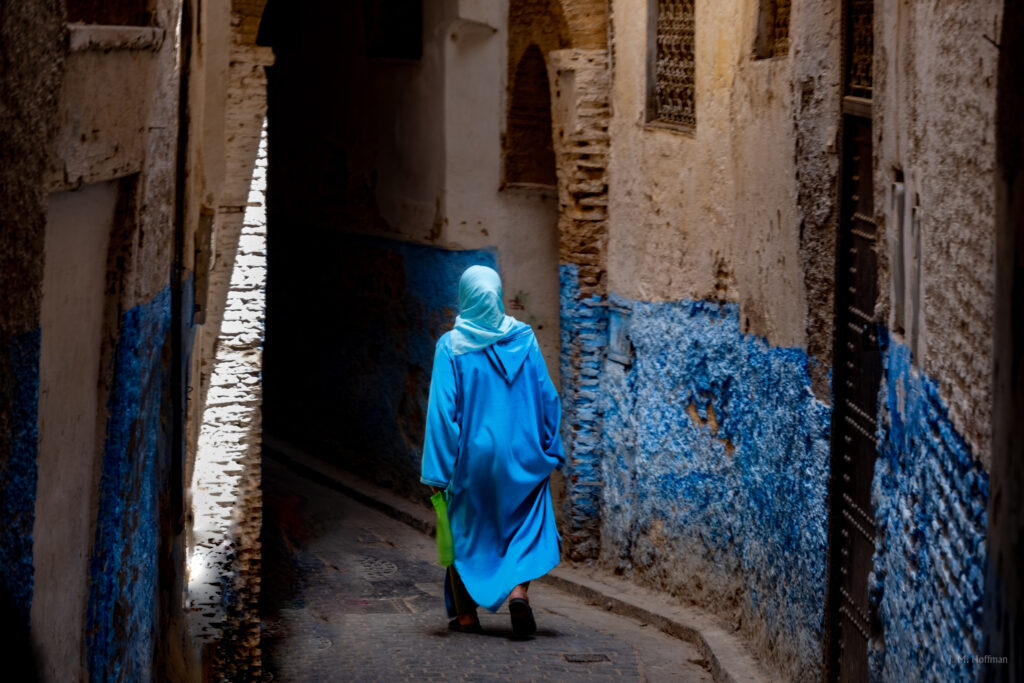
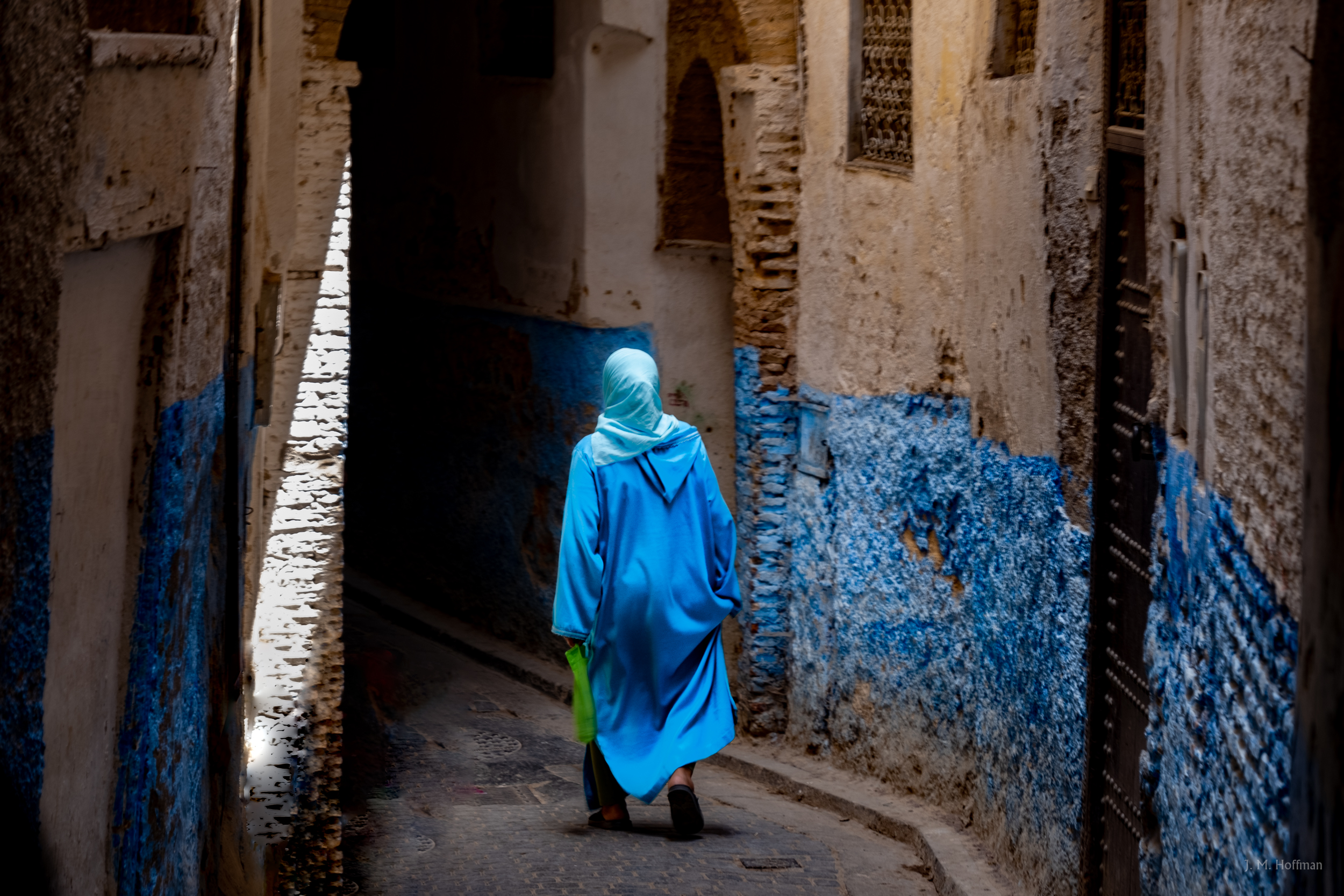
In the labyrinthine heart of Fez, a solitary figure in blue glides through whispers of history, where shadows dance with vibrant hues. Photo by Joel M. Hoffman. Copyright Joel M. Hoffman. Used with permission.