Capturing Airport Magic in Beijing: Reflections, Light and Life Explored
All airports look the same. But do they really?
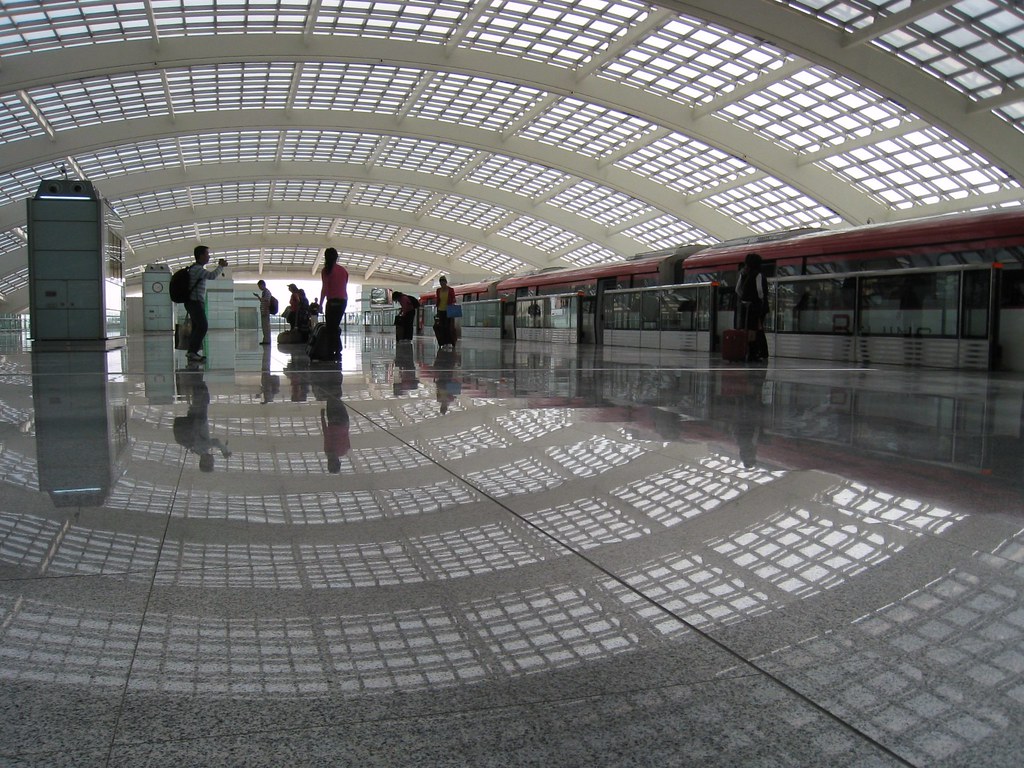
Beyond the familiar hum of luggage wheels and flight announcements lies a world brimming with visual intrigue. This compelling photo from Beijing Capital International Airport (PEK) invites us to explore the hidden beauty of airport photography—and offers practical tips to elevate your own travel shots into striking visual stories.
Table of Contents
- Mastering Reflections
- Architectural Grandeur
- Human Element
- Playing With Light
- Creating Balance & Harmony
- Conclusion: Embrace the Unexpected
Mastering Reflections
This image dazzles through its expert use of reflections. The polished floor acts as a mirror, perfectly duplicating the ceiling’s structure and creating a symmetrical world that feels both grounded and surreal. Mastering reflections means embracing patience and precision—waiting for the moment light, surface, and subject align.
Takeaway: Seek out reflective surfaces—floors, glass walls, even chrome railings—and experiment with perspective. A mirrored scene often tells twice the story in a single frame.
Architectural Grandeur
Airports are cathedrals of modern movement. This photo showcases their structural splendor, with soaring curves and lines pulling the eye forward in an endless visual journey. When approached with intention, these vast interiors become majestic backdrops for your lens.
Takeaway: Use leading lines, curves, and vanishing points to convey scale and drama. Let architecture be more than setting—make it the subject.
Human Element
Despite the scale, it’s the solitary travelers who breathe life into the space. A paused figure with luggage becomes a moment of shared humanity—a reminder that every gate holds a thousand untold stories.
Takeaway: Include people in your shots to add narrative and emotion. Look for natural pauses, gestures, or expressions that anchor your composition in something universally human.
Playing With Light
Look closely at how light streams through the overhead lattice. It doesn’t just illuminate—it sculpts. Shadows stretch, fold, and shift across surfaces like choreography, giving dimension and texture to the scene.
Takeaway: Observe how light interacts with surfaces at different times of day. Embrace shadows—they aren’t flaws, but characters in your image’s story.
Creating Balance & Harmony
This composition works because everything finds its place. Travelers are spaced just so, architecture frames without overwhelming, and no element dominates. In the chaos of airports, the image finds serenity—a reminder that balance is not symmetry alone, but intentional harmony.
Takeaway: Aim for visual equilibrium. Use the rule of thirds, negative space, or radial symmetry to create images that feel grounded and complete.
Conclusion: Embrace the Unexpected
Airport photography challenges us to see beyond the routine. With the right eye, these transient spaces become canvases of structure, light, and life. The next time you pass through security, pause—and let your camera uncover beauty in the layover.

In the architectural splendor of Beijing’s Terminal 3, passengers glide across gleaming floors, their reflections merging with the intricate latticework above. Photo by Mike W.. Licensed under CC BY-SA.