Urban Drama: Cape Town’s Architecture in Monochrome Majesty
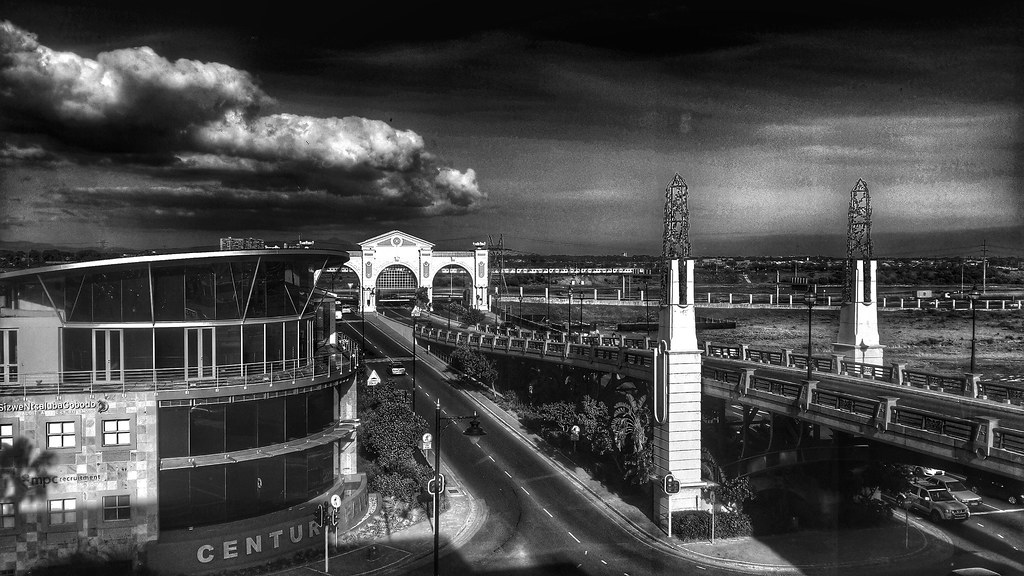
Some photographs don’t just catch the eye—they demand attention. This black and white image is one such example, offering a hauntingly beautiful window into the soul of urban architecture. It’s a portrait not just of buildings, but of the mood, texture, and movement within a city’s bones.
Table of Contents
- The Art of Black and White Photography
- Capturing Architectural Grandeur
- Mastering Contrast for Impact
- Lessons for Travel Photography Enthusiasts
- Final Thoughts
The Art of Black and White Photography
Black and white photography strips away distraction, leaving only light, shadow, and form. It’s here that emotion and structure emerge most powerfully. In this image, luminous clouds churn above like a celestial canvas, while bold lines and surfaces below anchor the scene in earthly resolve. Every contrast, every detail, sings in harmony.
If you’re new to monochrome, start by studying how light sculpts your subject. Look for textures—cracked walls, metallic curves, drifting clouds—that come alive when freed from the clutter of color.
Capturing Architectural Grandeur
In this frame, Cape Town’s architecture isn’t just shown—it’s celebrated. The bridge arcs gracefully through the composition, pulling the viewer forward and inviting a sense of motion and wonder. The reward at the end is the nicely lit structure. All in all, this is a study in elegance and scale, anchored in place yet whispering of destinations beyond.
To elevate your cityscape photography:
- Scout Smart: Visit your location at different times of day to find when light best reveals its personality.
- Use Leading Lines: Roads, bridges, and shadows can all become arrows guiding the viewer into your frame.
- Find the Story: Seek out what makes a structure stand apart—its age, design, or the feeling it evokes—and let that lead your composition.
Mastering Contrast for Impact
High-contrast black and white photography isn’t just about aesthetic—it’s about emotion. This image harnesses deep blacks and luminous whites to craft a sense of drama, giving even static elements a beating heart. It doesn’t just depict—it declares.
- Pro Tip: Contrast is your storytelling tool. Use it in post-processing to sculpt mood, but don’t overdo it—preserve the subtle textures in both shadow and light to maintain depth and realism.
Lessons for Travel Photography Enthusiasts
Great travel photography isn’t about documenting a place—it’s about capturing how that place feels. This photo reflects the tension and harmony of modern life: the movement of roads against the stillness of concrete, the weight of buildings against the openness of sky.
Key Takeaways:
-
Time It Right: Golden hours—early morning and late afternoon—cast soft, angled light that flatters buildings and landscapes alike.
-
Break the Rules: Creativity lives in experimentation. Try different perspectives, filters, or camera settings until something clicks—literally and figuratively.
Let these principles guide your lens, but always leave room for spontaneity. The world isn’t a checklist—it’s a canvas. Every new place offers a fresh story waiting to be told through your viewfinder.
Final Thoughts
This monochrome moment from Cape Town does more than freeze time—it captures emotion, motion, and meaning in a single frame. With attention to contrast, composition, and context, a photographer transforms a static scene into a living narrative.
Whether you’re enchanted by the timeless elegance of black and white or the energetic buzz of global cityscapes, trust your instincts. Every shutter click is a declaration: of perspective, of emotion, of the way you see the world.
So sling your camera over your shoulder and head into the unknown. There are stories waiting out there—and only you can tell them.

A striking black and white view of Century City in Cape Town captures the blend of modern architecture and expansive landscapes under a dramatic cloud-filled sky. Photo by Stephen Koigi. Licensed under CC BY.